

Wealth Flash
The Knowledge Share
Shrinking the Fed’s $7T Balance Sheet: “Short Steps”, Not “Long Strides”
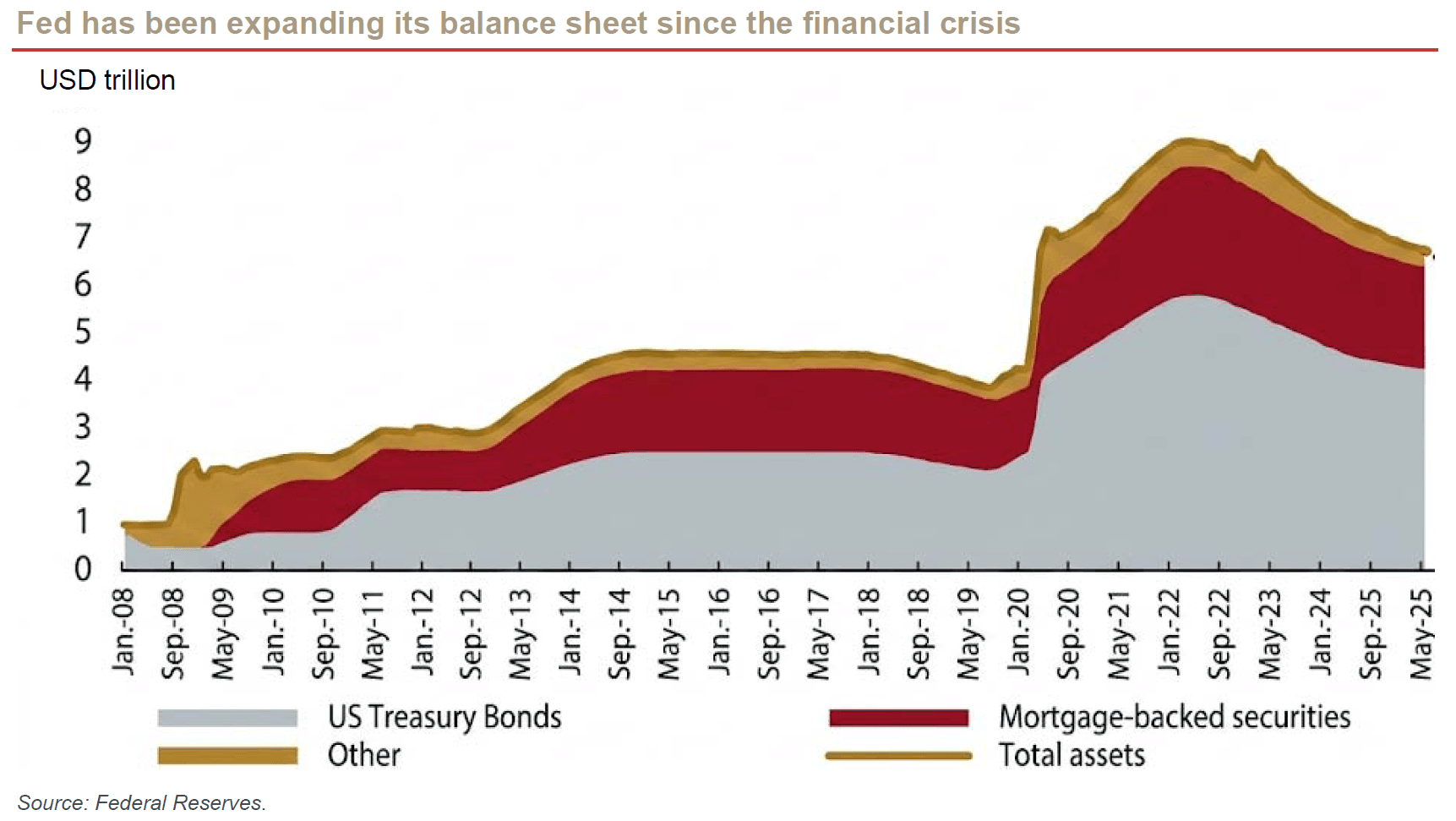
The Fed’s balance sheet now stands at a towering USD 7 trillion. Even the pro-QE camp acknowledges that further expansion is constrained for technical reasons. The anti-QE camp argues the balance sheet shouldn’t be this large in the first place. Either way, shrinking the Fed’s balance sheet seems evitable. Read on to find out how this may unfold, and what it means for fixed income.
CIO Summary
- Walk, not run. The Fed accumulated its USD 7 trillion balance sheet through years of Quantitative Easing (QE). The program has created abundant reserves, which is critical to the US banking system. Draining the reserves too quickly could trigger a liquidity crunch and even a financial crisis,
- Stay short, stay high-quality. As a strategy, new Fed Chair Warsh is likely to change the balance sheet composition: allowing long-dated bonds to mature and replacing them with short-term Treasury bills. This reinforces our fixed-income Core Recommendation of staying short in duration and high in quality.
The Economist recently featured an article, “How to shrink the Fed’s $7trn balance-sheet”. We’d like to share a few key takeaways from this piece. Hope you will find them useful.
- How was the Fed’s USD 7-8 trillion balance sheet formed? During the 2008 crisis and again the 2020 pandemic, the Fed bought massive amounts of government bonds from investors to support the economy – a process known as Quantitative Easing (QE). It goes like this: the central bank buys debt from the market, and credits the seller with new electronic deposits at the Fed. These deposits, known as "reserves", grew from a mere USD 10 billion before 2008 to around USD 3 trillion today.
- Why can't the Fed easily drain the reserves? Following years of QE, banks are now sitting on abundant reserves and increasingly dependent on them. New regulations also require banks to hold large cash buffers. If the Fed pulls the plug too fast, banks will scramble for cash, freezing the interbank lending market and resulting in overnight interest rates spikes. This could lead to a liquidity crunch and even a financial crisis. The risk is not theoretical — it actually happened in September 2019 and again in late 2025, forcing the Fed to reverse course and inject cash back into the system.
- Why Warsh still wants to shrink the balance sheet? The Fed is now suffering losses, currently paying banks about 3.65% interest on those reserves, while receiving very low yields from the bonds they bought previously. This was because interest rates were near zero back then. This mismatch has caused the Fed significant financial losses over the past few years.
- What could Warsh actually do? The article concludes that, rather than draining the reservoir too aggressively, Warsh will likely settle for changing the holding structure. As a strategy, the Fed can replace long-term bonds with short-term Treasury bills as the former mature. This would mitigate the Fed's influence over long-term borrowing costs while preserving the reserves that banks depend on, avoiding shocks to the system.
Our Take
- Operational hurdles matter. The Economist article highlights a key point that is often overlooked in the QE vs. QT debate: the real hurdle is not the Fed Chair’s political will, but the plumbing of the US banking system that restricts how far the Fed’s balance sheet can shrink.
- This aligns with our short duration call. As the article noted, Warsh is likely to adjust the composition of Fed’s balance sheet, by allowing long-dated bonds to mature and replacing them with short-term Treasury bills. This playbook aligns with our fixed income recommendation of “Stay Short, Stay High-Quality”, please refer to our latest Fixed Income Monthly report for more information.
The Fed’s balance sheet now stands at a towering USD 7 trillion. Even the pro-QE camp acknowledges that further expansion is constrained for technical reasons. The anti-QE camp argues the balance sheet shouldn’t be this large in the first place. Either way, shrinking the Fed’s balance sheet seems evitable. Read on to find out how this may unfold, and what it means for fixed income.
CIO Summary
- Walk, not run. The Fed accumulated its USD 7 trillion balance sheet through years of Quantitative Easing (QE). The program has created abundant reserves, which is critical to the US banking system. Draining the reserves too quickly could trigger a liquidity crunch and even a financial crisis,
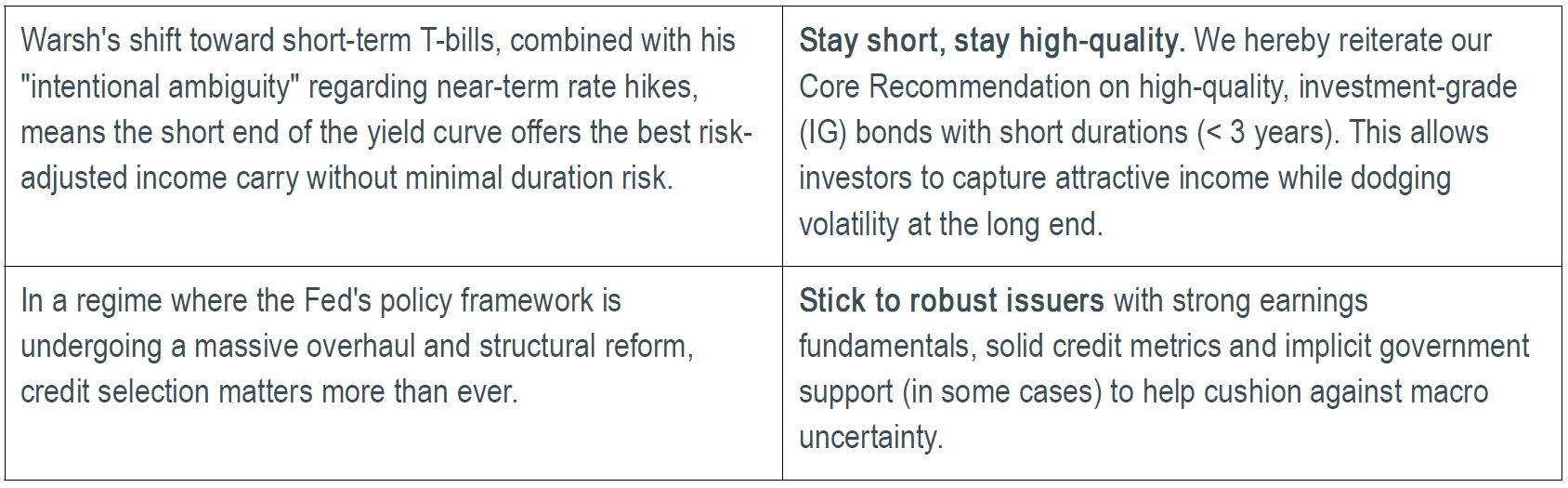
- Stay short, stay high-quality. As a strategy, new Fed Chair Warsh is likely to change the balance sheet composition: allowing long-dated bonds to mature and replacing them with short-term Treasury bills. This reinforces our fixed-income Core Recommendation of staying short in duration and high in quality.
The Economist recently featured an article, “How to shrink the Fed’s $7trn balance-sheet”. We’d like to share a few key takeaways from this piece. Hope you will find them useful.
- How was the Fed’s USD 7-8 trillion balance sheet formed? During the 2008 crisis and again the 2020 pandemic, the Fed bought massive amounts of government bonds from investors to support the economy – a process known as Quantitative Easing (QE). It goes like this: the central bank buys debt from the market, and credits the seller with new electronic deposits at the Fed. These deposits, known as "reserves", grew from a mere USD 10 billion before 2008 to around USD 3 trillion today.
- Why can't the Fed easily drain the reserves? Following years of QE, banks are now sitting on abundant reserves and increasingly dependent on them. New regulations also require banks to hold large cash buffers. If the Fed pulls the plug too fast, banks will scramble for cash, freezing the interbank lending market and resulting in overnight interest rates spikes. This could lead to a liquidity crunch and even a financial crisis. The risk is not theoretical — it actually happened in September 2019 and again in late 2025, forcing the Fed to reverse course and inject cash back into the system.
- Why Warsh still wants to shrink the balance sheet? The Fed is now suffering losses, currently paying banks about 3.65% interest on those reserves, while receiving very low yields from the bonds they bought previously. This was because interest rates were near zero back then. This mismatch has caused the Fed significant financial losses over the past few years.
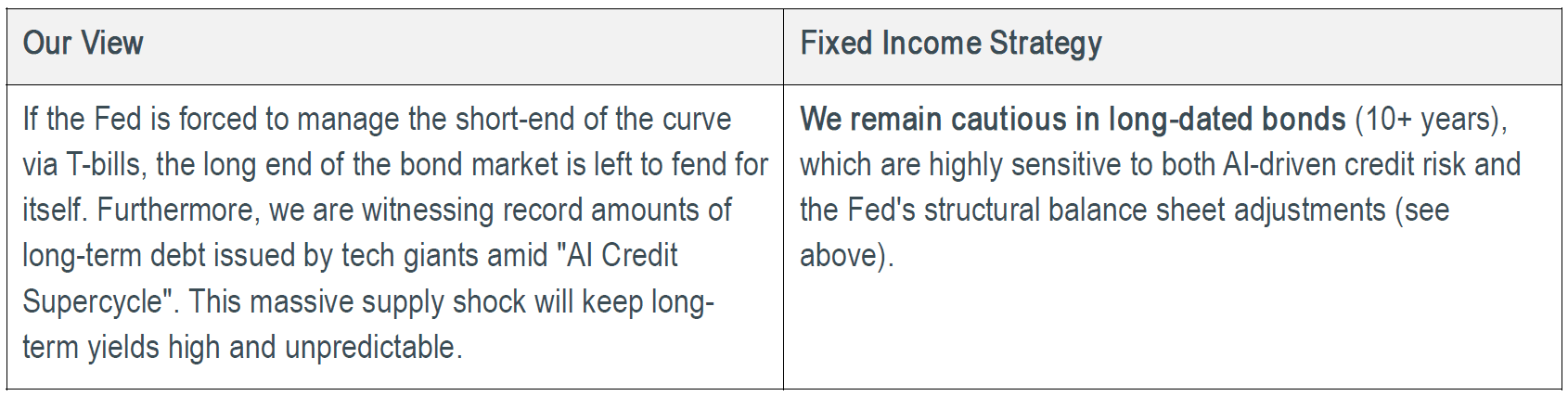
- What could Warsh actually do? The article concludes that, rather than draining the reservoir too aggressively, Warsh will likely settle for changing the holding structure. As a strategy, the Fed can replace long-term bonds with short-term Treasury bills as the former mature. This would mitigate the Fed's influence over long-term borrowing costs while preserving the reserves that banks depend on, avoiding shocks to the system.
Our Take
- Operational hurdles matter. The Economist article highlights a key point that is often overlooked in the QE vs. QT debate: the real hurdle is not the Fed Chair’s political will, but the plumbing of the US banking system that restricts how far the Fed’s balance sheet can shrink.
- This aligns with our short duration call. As the article noted, Warsh is likely to adjust the composition of Fed’s balance sheet, by allowing long-dated bonds to mature and replacing them with short-term Treasury bills. This playbook aligns with our fixed income recommendation of “Stay Short, Stay High-Quality”, please refer to our latest Fixed Income Monthly report for more information.
Disclosures and disclaimers
This report is provided subject to, and must be read together with, the full Disclosures / Disclaimers available at this link, which are incorporated by reference into this report. In particular, this report is intended for general circulation and informational purposes only and does not constitute personal investment advice or a recommendation to buy or sell any investment product or security. You should independently evaluate the information and, where necessary, seek advice from a qualified financial adviser regarding the suitability of any investment. Analyst certifications required under applicable regulations, including SEC Regulation AC (where relevant), are included in this report. By accessing, receiving or using this report, you acknowledge that you have read, understood and agreed to be bound by the Disclosures / Disclaimers, as may be amended, supplemented or updated from time to time.


