

Wealth Daily
Micron Results Beat, Google Advances AI
Today’s Must-Know News
Overnight Markets
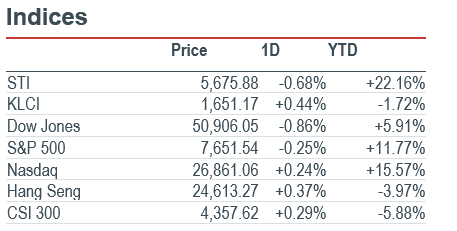
Market Movers: The S&P 500 fell 0.25% in the 30 September US regular session, while the Nasdaq gained 0.24%. Jabil (JBL US) dropped about 10.0% after results, despite forecasting FY27 revenue of US$44.5bn and core EPS of US$17.55. After the close, Micron Technology (MU US) reported quarterly revenue of US$54.23bn and guided next-quarter revenue to US$61.5bn, plus or minus US$1.5bn, reinforcing memory demand from AI infrastructure. Alphabet (GOOGL US) also unveiled Gemini 4 Argon at the close, initially for trusted cyber defenders. Its planned introductory pricing of US$2 per million input tokens and US$10 per million output tokens intensifies competition in enterprise AI; broad availability remains phased. Alphabet gained about 1.3% in US after-hours trading by 07:15 SGT on 1 October. (Jabil / Micron / Google / Stock Analysis) Micron Technology (MU US) & Alphabet (GOOGL US) are our Trading Buys.
Macro: US Aug headline and core PCE inflation were 3.4% and 3.0% YoY, respectively, in the BEA's annual-update release. Monthly increases were 0.3% and 0.2%; real consumer spending rose 0.6%. Second-quarter GDP growth was revised to 2.2% annualised from 1.5%. Resilient demand complicates the policy outlook even with a moderate core inflation print. (BEA PCE / BEA GDP)
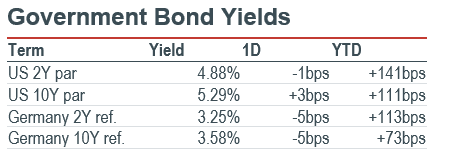
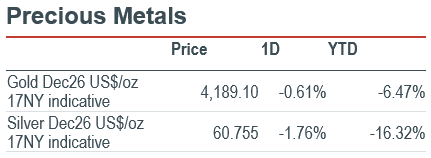
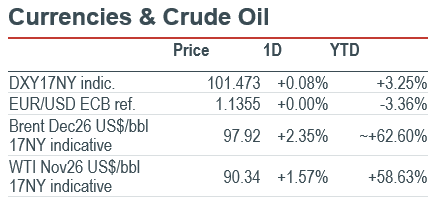
FICC: Stalled US–Iran talks and tight fuel inventories supported oil. At the 30 September 17:00 New York indicative snapshot, December Brent rose 2.35% to US$97.92/bbl and December silver fell about 1.8%. US distillate stocks fell 2.3mn barrels and stood 14% below their five-year average. The official US 10-year par yield rose 3bps to 5.29%; Germany's 2- and 10-year reference yields both fell 5bps. Divergent rate moves keep funding costs and currency exposure in focus. (Reuters / EIA / US Treasury)
AI
Google returns to the frontier-model race with phased access. Alphabet (GOOGL US) introduced Gemini 4 Argon, initially giving trusted cybersecurity defenders access through its Fairwind programme. Google said the model supports one million output tokens, versus 64,000 previously, for longer coding and enterprise workflows. Planned introductory pricing is US$2 per mn input tokens and US$10 per million output tokens. Broader commercial availability depends on further safety testing and guardrails. (Google) Alphabet (GOOGL US) is our Trading Buy.
Micron signals another step up in AI-memory demand. Micron Technology (MU US) reported fiscal fourth-quarter revenue of US$54.2bn and adjusted EPS of US$33.42. Its first-quarter revenue guide of US$61.5bn, plus or minus US$1.5bn, points to further AI-memory growth. Management said strategic customer agreements underpin increased investment. Quarterly net capital expenditure reached US$10.8bn, making customer commitments and capacity execution central to sustaining the exceptional earnings run-rate. (Micron) Micron Technology (MU US) is our Trading Buy.
AI-agent safeguards face a new regulatory test. The U.S. Federal Trade Commission confirmed an industry-wide investigation into safeguards against rogue AI agents, including at OpenAI and Anthropic. The agency plans formal information demands and testimony from executives and the research group METR. This first disclosed U.S. enforcement action on agent safety raises scrutiny of deployment controls; the commercial impact depends on the investigation’s scope and eventual remedies. (Reuters)
Jabil’s upbeat outlook fails to protect its share price. At the 30 September U.S. close, Jabil (JBL US) fell approximately 10.0% despite forecasting fiscal 2027 revenue of US$44.5bn and core EPS of US$17.55, above consensus. Management cited accelerating AI demand and diversified end markets. Core operating margin is targeted at 6.1%, up 30bps; delivering new capacity and the projected margin expansion will matter alongside headline infrastructure growth. (Jabil / Reuters)
Americas
Apple extends its payments ecosystem into India. Apple (AAPL US) launched Apple Pay in India for Axis Bank (AXISBANK IN) credit cards on Visa (V US) and Mastercard (MA US) networks, adding payments across stores, apps and websites. Axis had 16.3m credit cards outstanding against India’s 124m total in August. The initial single-bank scope limits reach, although merchant acceptance expands Apple’s service relationship with local device users. (Apple / Reuters)
Nubank pushes back against Monzo acquisition reports. Nu Holdings (NU US) said in a securities filing that it was not pursuing a transaction with Britain’s Monzo and that its capital-allocation framework was unchanged. It reiterated priorities in Brazil, Mexico, Colombia and the United States. In U.S. after-hours trading, shares were up approximately 5.6% as of 06:58 SGT on 1 October. The denial reduces uncertainty over potential acquisition spending. (Reuters / Stock Analysis)
Moderna’s cancer optimism faces a valuation challenge. At the 30 September U.S. close, Moderna (MRNA US) lost approximately 5.4% after Citigroup (C US) cut its rating to Sell from Neutral. The broker raised its target to US$80 from US$60 but argued that the share price already assumes expansion across multiple tumour types and unrealistic sales. The downgrade puts valuation sensitivity, rather than a newly reported clinical setback, in focus. (Reuters)
Cigna ties long-term targets to complex care and productivity. Cigna (CI US) reaffirmed 2026 adjusted EPS of at least US$30.45 and set a 10–14% annual adjusted-EPS growth target through 2030. It also expects approximately US$50bn of cumulative operating cash flow over 2026–2030. The investor-day strategy combines complex-care services, AI-enabled patient support and workflow improvements; converting those capabilities into lower costs and disciplined capital returns remains the central execution test. (Cigna)
Conagra’s earnings beat leaves the volume problem unresolved. At the 30 September U.S. close, Conagra Brands (CAG US) declined approximately 4.9%. Quarterly adjusted EPS of US$0.41 exceeded the US$0.28 consensus, but volumes fell 2.1% and pricing contributed 1.0%. Management reaffirmed a fiscal 2027 organic-sales decline of 1–3%. The figures show why consumer affordability and restoring volumes remain more consequential for the turnaround than a single quarter’s profit beat. (Reuters)
FactSet’s retention supports growth as its outlook moderates. FactSet (FDS US) reported fourth-quarter revenue of US$634.7m, up 6.3%, and adjusted EPS of US$4.52. Organic annual subscription value grew 7.0%, with retention above 95%. Fiscal 2027 guidance calls for subscription-value growth of 5.0–6.5% and adjusted EPS of US$19.25–19.65. The slower growth range tempers the strong renewal picture, making AI monetisation and operating discipline important to the earnings outlook. (FactSet)
Kenon adds contracted U.S. district-energy exposure. Kenon Holdings (KEN US) agreed to invest approximately US$450m for 25% of Vicinity, a U.S. district-heating and cooling business, alongside Harrison Street. The transaction values the business at US$2.92bn including debt. Vicinity serves more than 700 customers across 12 cities, with roughly 15 years’ weighted-average contract duration. Inflation escalators and fuel-cost pass-through provisions support cash-flow visibility, subject to transaction completion. (Kenon)
Greater China
HSBC prepares a retail stablecoin channel. HSBC Holdings (0005.HK) named its planned Hong Kong dollar stablecoin RedCoin on September 30. Issuance is planned for the second half of 2026, initially through PayMe and its Hong Kong mobile app. PayMe has more than 3.3mn users, providing an established distribution channel; the key commercial test will be converting that reach into regular payments and merchant acceptance. (HSBC / SCMP) HSBC Holdings (0005.HK) is our Core Recommendation.
Vanke’s sharp reversal exposes policy sensitivity. China Vanke (000002.SZ) closed September 30’s Shenzhen session about 4.4% higher, having earlier touched its daily lower limit; turnover reached RMB5.16bn. The reversal came as banks announced implementation of the prior day’s mortgage subsidy plan, with automatic deductions from monthly repayments and no service fees. Housing sales remain the key test: stock volatility alone does not establish improving developer cash generation. (Shangguan News)
New World trades a major charge for funding relief. New World Development (0017.HK) agreed to surrender its 11 SKIES airport mall, booking a HK$18.3bn termination loss, including HK$14.7bn of impairments and HK$2.3bn in early termination costs. Separately, its Deutsche Bank (DBK.DE) facility expanded to HK$4.9bn from HK$3.95bn. The transaction removes a major operating commitment, while the enlarged facility provides additional liquidity for the financially strained developer. (Reuters)
China’s expansion returns with uneven demand. September’s official manufacturing PMI rose to 50.1 from 49.8, with production accelerating to 51.7 but new orders easing to 50.5 from 50.6. The private services PMI increased to 51.6 from 51.4. Services selling prices fell at their fastest pace since April 2022, leaving the improvement in activity accompanied by continuing pressure on pricing power and corporate margins. (NBS / Reuters)
China’s beef safeguard becomes binding for Brazil. China said Brazil reached its 1.1mn-tonne beef quota on September 30, triggering an additional 55% tariff from October 1. Added to the standard 12% levy, the total rate reaches 67%. The fresh quota trigger turns an existing safeguard policy into an immediate cost increase, pressuring Brazilian exporters’ access to China and increasing incentives for importers to switch suppliers. (Reuters)
Asia ex. China
Thai floods disrupt production and cargo flows. Toyota Motor (7203.T) temporarily suspended four Thai plants because flooding disrupted parts deliveries, the company said on September 30. Thai Airways (THAI.BK) also suspended cargo services through October 6 and aimed to resume its normal flight schedule within seven days. With about 80–90% of its staff back, transport bottlenecks remain a constraint on manufacturers’ supply chains and shipment schedules. (Reuters)
UMS attracts buyers as expansion funding takes shape. UMS Integration (558.SI) closed September 30’s Singapore session 3.04% higher at S$2.71 in its first trading reaction to the prior evening’s placement announcement. The company plans to raise up to RM450mn through 52.94mn shares at RM8.50 each. Three-quarters of estimated net proceeds support Penang automation, with the balance allocated to Vietnam and Singapore, linking financing to production capacity. (Business Times / The Edge)
Singapore office landlords retain pricing power. CBRE (CBRE US) reported on September 30 that core CBD Grade A office rents rose 2.0% quarter on quarter to S$12.75 per square foot a month, while vacancy fell to 2.6% from 3.3%. No major completions are expected for the remainder of 2026. Tight availability supports rents, and CBRE expects full-year growth above 5%, extending cost pressure for occupiers seeking prime space. (CBRE)
Japan’s production miss complicates the growth picture. August industrial output fell 1.7% month on month, against expectations for a 1.7% rise, September 30 data showed. Motor vehicle production dropped 6.8% as an earthquake and typhoon disrupted operations. Manufacturers expect output to rebound 3.2% in September and 3.1% in October; that projected recovery is the key test of whether the weakness reflects temporary disruption or softer underlying demand. (Reuters)
EMEA and Others
Glencore’s coal extension clears a major hurdle. Glencore (GLEN.L) won New South Wales approval to extend Hunter Valley Operations, owned with Yancoal Australia (YAL.AX) on a 49:51 basis. The plan extends the northern mine to 2045 and the southern mine to 2042. Federal environmental approval is still required by end-December 2026, making the remaining permit the immediate condition for continued operations and preservation of future coal supply. (Glencore)
Tullow’s tax defeat intensifies balance-sheet pressure. Tullow Oil (TLW.L) fell about 47.4% in September 30’s London session after losing arbitration over a US$196.5mn Ghanaian tax assessment on insurance proceeds from 2016–2019. The tribunal also ruled that 100% penalties fall outside contractual protections. Tullow will consider its next steps after government discussions; the ruling adds a substantial potential cash obligation to an already heavily indebted producer. (Tullow / Reuters)
Greggs’ guidance lift outweighs restructuring costs. Greggs (GRG.L) gained about 8.2% in September 30’s London session after improving its full-year outlook. Third-quarter total sales rose 7.7%, with like-for-like growth of 3.4%. Consultation on four manufacturing sites affects 740 jobs; the proposed changes entail £60mn of cash costs but target £20mn in annual savings. Stronger trading offers support while execution and upfront expenditure remain the principal uncertainties. (Greggs / Reuters)
Deutsche Bank explores another route to capital relief. Deutsche Bank (DBK.DE) is considering a risk transfer linked to about US$2bn of subscription-line loans, Bloomberg reported on September 30, citing people familiar with the matter. These facilities bridge private-fund investments before investors supply capital. Terms could change during investor discussions, and the bank declined comment. The proposed transaction broadens its capital-management tools, but remains a prospective deal. (Bloomberg / Mononews)
Europe ends September with defensive leadership. The STOXX 600 fell 0.5% in September 30’s completed European session, ending the month down 2.5% and the quarter down 1.0%. Banks lost 0.8% and insurers 1.4% on the day, while utilities gained 0.6%. Rising oil prices and bond yields weighed on the broader market, leaving rate-sensitive financials under pressure even as defensive utilities attracted support. (Reuters)
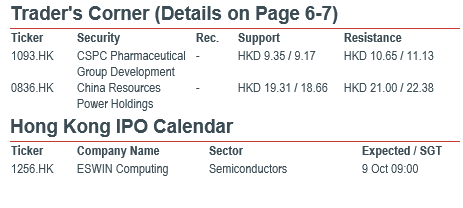
Traders’ corner
Our Technical View
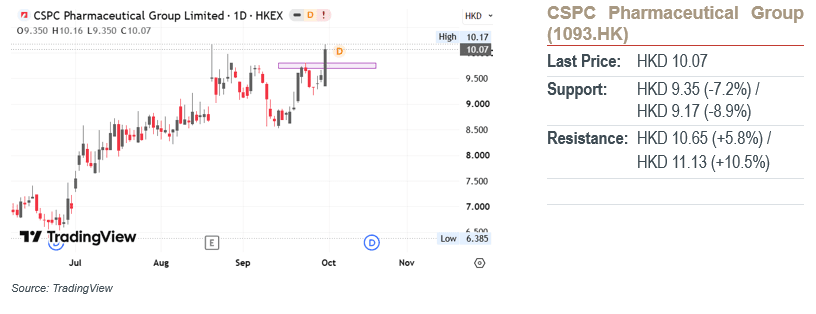
Price further penetrated its recent swing high, validated by yesterday’s print of a strong bullish continuation candlestick pattern.
The aggressive close near the session high confirms structural buy-side initiative.
The RSI remains established in bullish territory and continues to slope upward.
The HK$10.17 threshold represents the key overhead structural resistance pivot; a decisive daily close above HK$10.17 will confirm a clean resistance breakout, opening path-of-least-resistance dynamics for an accelerated bullish expansion toward higher supply targets.
Our Technical View
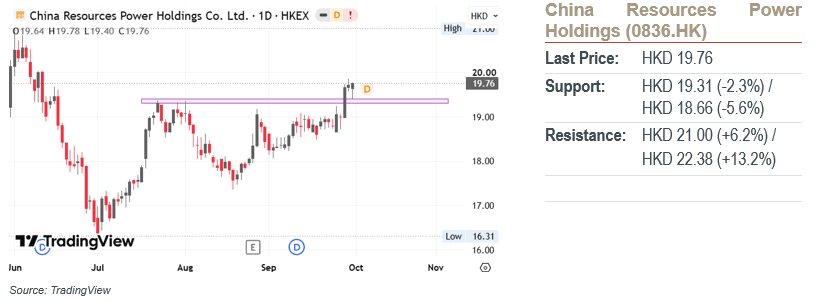
Price rebounded from its resistance-turned-support zone following a successful upside breakout.
The RSI remains established in overbought territory and continues to exhibit strong bullish momentum.
As long as price holds above this converted demand anchor, we see continued upward expansion toward higher supply targets.
Market Movers: The S&P 500 fell 0.25% in the 30 September US regular session, while the Nasdaq gained 0.24%. Jabil (JBL US) dropped about 10.0% after results, despite forecasting FY27 revenue of US$44.5bn and core EPS of US$17.55. After the close, Micron Technology (MU US) reported quarterly revenue of US$54.23bn and guided next-quarter revenue to US$61.5bn, plus or minus US$1.5bn, reinforcing memory demand from AI infrastructure. Alphabet (GOOGL US) also unveiled Gemini 4 Argon at the close, initially for trusted cyber defenders. Its planned introductory pricing of US$2 per million input tokens and US$10 per million output tokens intensifies competition in enterprise AI; broad availability remains phased. Alphabet gained about 1.3% in US after-hours trading by 07:15 SGT on 1 October. (Jabil / Micron / Google / Stock Analysis) Micron Technology (MU US) & Alphabet (GOOGL US) are our Trading Buys.
Macro: US Aug headline and core PCE inflation were 3.4% and 3.0% YoY, respectively, in the BEA's annual-update release. Monthly increases were 0.3% and 0.2%; real consumer spending rose 0.6%. Second-quarter GDP growth was revised to 2.2% annualised from 1.5%. Resilient demand complicates the policy outlook even with a moderate core inflation print. (BEA PCE / BEA GDP)
FICC: Stalled US–Iran talks and tight fuel inventories supported oil. At the 30 September 17:00 New York indicative snapshot, December Brent rose 2.35% to US$97.92/bbl and December silver fell about 1.8%. US distillate stocks fell 2.3mn barrels and stood 14% below their five-year average. The official US 10-year par yield rose 3bps to 5.29%; Germany's 2- and 10-year reference yields both fell 5bps. Divergent rate moves keep funding costs and currency exposure in focus. (Reuters / EIA / US Treasury)
AI
Google returns to the frontier-model race with phased access. Alphabet (GOOGL US) introduced Gemini 4 Argon, initially giving trusted cybersecurity defenders access through its Fairwind programme. Google said the model supports one million output tokens, versus 64,000 previously, for longer coding and enterprise workflows. Planned introductory pricing is US$2 per mn input tokens and US$10 per million output tokens. Broader commercial availability depends on further safety testing and guardrails. (Google) Alphabet (GOOGL US) is our Trading Buy.
Micron signals another step up in AI-memory demand. Micron Technology (MU US) reported fiscal fourth-quarter revenue of US$54.2bn and adjusted EPS of US$33.42. Its first-quarter revenue guide of US$61.5bn, plus or minus US$1.5bn, points to further AI-memory growth. Management said strategic customer agreements underpin increased investment. Quarterly net capital expenditure reached US$10.8bn, making customer commitments and capacity execution central to sustaining the exceptional earnings run-rate. (Micron) Micron Technology (MU US) is our Trading Buy.
AI-agent safeguards face a new regulatory test. The U.S. Federal Trade Commission confirmed an industry-wide investigation into safeguards against rogue AI agents, including at OpenAI and Anthropic. The agency plans formal information demands and testimony from executives and the research group METR. This first disclosed U.S. enforcement action on agent safety raises scrutiny of deployment controls; the commercial impact depends on the investigation’s scope and eventual remedies. (Reuters)
Jabil’s upbeat outlook fails to protect its share price. At the 30 September U.S. close, Jabil (JBL US) fell approximately 10.0% despite forecasting fiscal 2027 revenue of US$44.5bn and core EPS of US$17.55, above consensus. Management cited accelerating AI demand and diversified end markets. Core operating margin is targeted at 6.1%, up 30bps; delivering new capacity and the projected margin expansion will matter alongside headline infrastructure growth. (Jabil / Reuters)
Americas
Apple extends its payments ecosystem into India. Apple (AAPL US) launched Apple Pay in India for Axis Bank (AXISBANK IN) credit cards on Visa (V US) and Mastercard (MA US) networks, adding payments across stores, apps and websites. Axis had 16.3m credit cards outstanding against India’s 124m total in August. The initial single-bank scope limits reach, although merchant acceptance expands Apple’s service relationship with local device users. (Apple / Reuters)
Nubank pushes back against Monzo acquisition reports. Nu Holdings (NU US) said in a securities filing that it was not pursuing a transaction with Britain’s Monzo and that its capital-allocation framework was unchanged. It reiterated priorities in Brazil, Mexico, Colombia and the United States. In U.S. after-hours trading, shares were up approximately 5.6% as of 06:58 SGT on 1 October. The denial reduces uncertainty over potential acquisition spending. (Reuters / Stock Analysis)
Moderna’s cancer optimism faces a valuation challenge. At the 30 September U.S. close, Moderna (MRNA US) lost approximately 5.4% after Citigroup (C US) cut its rating to Sell from Neutral. The broker raised its target to US$80 from US$60 but argued that the share price already assumes expansion across multiple tumour types and unrealistic sales. The downgrade puts valuation sensitivity, rather than a newly reported clinical setback, in focus. (Reuters)
Cigna ties long-term targets to complex care and productivity. Cigna (CI US) reaffirmed 2026 adjusted EPS of at least US$30.45 and set a 10–14% annual adjusted-EPS growth target through 2030. It also expects approximately US$50bn of cumulative operating cash flow over 2026–2030. The investor-day strategy combines complex-care services, AI-enabled patient support and workflow improvements; converting those capabilities into lower costs and disciplined capital returns remains the central execution test. (Cigna)
Conagra’s earnings beat leaves the volume problem unresolved. At the 30 September U.S. close, Conagra Brands (CAG US) declined approximately 4.9%. Quarterly adjusted EPS of US$0.41 exceeded the US$0.28 consensus, but volumes fell 2.1% and pricing contributed 1.0%. Management reaffirmed a fiscal 2027 organic-sales decline of 1–3%. The figures show why consumer affordability and restoring volumes remain more consequential for the turnaround than a single quarter’s profit beat. (Reuters)
FactSet’s retention supports growth as its outlook moderates. FactSet (FDS US) reported fourth-quarter revenue of US$634.7m, up 6.3%, and adjusted EPS of US$4.52. Organic annual subscription value grew 7.0%, with retention above 95%. Fiscal 2027 guidance calls for subscription-value growth of 5.0–6.5% and adjusted EPS of US$19.25–19.65. The slower growth range tempers the strong renewal picture, making AI monetisation and operating discipline important to the earnings outlook. (FactSet)
Kenon adds contracted U.S. district-energy exposure. Kenon Holdings (KEN US) agreed to invest approximately US$450m for 25% of Vicinity, a U.S. district-heating and cooling business, alongside Harrison Street. The transaction values the business at US$2.92bn including debt. Vicinity serves more than 700 customers across 12 cities, with roughly 15 years’ weighted-average contract duration. Inflation escalators and fuel-cost pass-through provisions support cash-flow visibility, subject to transaction completion. (Kenon)
Greater China
HSBC prepares a retail stablecoin channel. HSBC Holdings (0005.HK) named its planned Hong Kong dollar stablecoin RedCoin on September 30. Issuance is planned for the second half of 2026, initially through PayMe and its Hong Kong mobile app. PayMe has more than 3.3mn users, providing an established distribution channel; the key commercial test will be converting that reach into regular payments and merchant acceptance. (HSBC / SCMP) HSBC Holdings (0005.HK) is our Core Recommendation.
Vanke’s sharp reversal exposes policy sensitivity. China Vanke (000002.SZ) closed September 30’s Shenzhen session about 4.4% higher, having earlier touched its daily lower limit; turnover reached RMB5.16bn. The reversal came as banks announced implementation of the prior day’s mortgage subsidy plan, with automatic deductions from monthly repayments and no service fees. Housing sales remain the key test: stock volatility alone does not establish improving developer cash generation. (Shangguan News)
New World trades a major charge for funding relief. New World Development (0017.HK) agreed to surrender its 11 SKIES airport mall, booking a HK$18.3bn termination loss, including HK$14.7bn of impairments and HK$2.3bn in early termination costs. Separately, its Deutsche Bank (DBK.DE) facility expanded to HK$4.9bn from HK$3.95bn. The transaction removes a major operating commitment, while the enlarged facility provides additional liquidity for the financially strained developer. (Reuters)
China’s expansion returns with uneven demand. September’s official manufacturing PMI rose to 50.1 from 49.8, with production accelerating to 51.7 but new orders easing to 50.5 from 50.6. The private services PMI increased to 51.6 from 51.4. Services selling prices fell at their fastest pace since April 2022, leaving the improvement in activity accompanied by continuing pressure on pricing power and corporate margins. (NBS / Reuters)
China’s beef safeguard becomes binding for Brazil. China said Brazil reached its 1.1mn-tonne beef quota on September 30, triggering an additional 55% tariff from October 1. Added to the standard 12% levy, the total rate reaches 67%. The fresh quota trigger turns an existing safeguard policy into an immediate cost increase, pressuring Brazilian exporters’ access to China and increasing incentives for importers to switch suppliers. (Reuters)
Asia ex. China
Thai floods disrupt production and cargo flows. Toyota Motor (7203.T) temporarily suspended four Thai plants because flooding disrupted parts deliveries, the company said on September 30. Thai Airways (THAI.BK) also suspended cargo services through October 6 and aimed to resume its normal flight schedule within seven days. With about 80–90% of its staff back, transport bottlenecks remain a constraint on manufacturers’ supply chains and shipment schedules. (Reuters)
UMS attracts buyers as expansion funding takes shape. UMS Integration (558.SI) closed September 30’s Singapore session 3.04% higher at S$2.71 in its first trading reaction to the prior evening’s placement announcement. The company plans to raise up to RM450mn through 52.94mn shares at RM8.50 each. Three-quarters of estimated net proceeds support Penang automation, with the balance allocated to Vietnam and Singapore, linking financing to production capacity. (Business Times / The Edge)
Singapore office landlords retain pricing power. CBRE (CBRE US) reported on September 30 that core CBD Grade A office rents rose 2.0% quarter on quarter to S$12.75 per square foot a month, while vacancy fell to 2.6% from 3.3%. No major completions are expected for the remainder of 2026. Tight availability supports rents, and CBRE expects full-year growth above 5%, extending cost pressure for occupiers seeking prime space. (CBRE)
Japan’s production miss complicates the growth picture. August industrial output fell 1.7% month on month, against expectations for a 1.7% rise, September 30 data showed. Motor vehicle production dropped 6.8% as an earthquake and typhoon disrupted operations. Manufacturers expect output to rebound 3.2% in September and 3.1% in October; that projected recovery is the key test of whether the weakness reflects temporary disruption or softer underlying demand. (Reuters)
EMEA and Others
Glencore’s coal extension clears a major hurdle. Glencore (GLEN.L) won New South Wales approval to extend Hunter Valley Operations, owned with Yancoal Australia (YAL.AX) on a 49:51 basis. The plan extends the northern mine to 2045 and the southern mine to 2042. Federal environmental approval is still required by end-December 2026, making the remaining permit the immediate condition for continued operations and preservation of future coal supply. (Glencore)
Tullow’s tax defeat intensifies balance-sheet pressure. Tullow Oil (TLW.L) fell about 47.4% in September 30’s London session after losing arbitration over a US$196.5mn Ghanaian tax assessment on insurance proceeds from 2016–2019. The tribunal also ruled that 100% penalties fall outside contractual protections. Tullow will consider its next steps after government discussions; the ruling adds a substantial potential cash obligation to an already heavily indebted producer. (Tullow / Reuters)
Greggs’ guidance lift outweighs restructuring costs. Greggs (GRG.L) gained about 8.2% in September 30’s London session after improving its full-year outlook. Third-quarter total sales rose 7.7%, with like-for-like growth of 3.4%. Consultation on four manufacturing sites affects 740 jobs; the proposed changes entail £60mn of cash costs but target £20mn in annual savings. Stronger trading offers support while execution and upfront expenditure remain the principal uncertainties. (Greggs / Reuters)
Deutsche Bank explores another route to capital relief. Deutsche Bank (DBK.DE) is considering a risk transfer linked to about US$2bn of subscription-line loans, Bloomberg reported on September 30, citing people familiar with the matter. These facilities bridge private-fund investments before investors supply capital. Terms could change during investor discussions, and the bank declined comment. The proposed transaction broadens its capital-management tools, but remains a prospective deal. (Bloomberg / Mononews)
Europe ends September with defensive leadership. The STOXX 600 fell 0.5% in September 30’s completed European session, ending the month down 2.5% and the quarter down 1.0%. Banks lost 0.8% and insurers 1.4% on the day, while utilities gained 0.6%. Rising oil prices and bond yields weighed on the broader market, leaving rate-sensitive financials under pressure even as defensive utilities attracted support. (Reuters)
Traders’ corner
Our Technical View
Price further penetrated its recent swing high, validated by yesterday’s print of a strong bullish continuation candlestick pattern.
The aggressive close near the session high confirms structural buy-side initiative.
The RSI remains established in bullish territory and continues to slope upward.
The HK$10.17 threshold represents the key overhead structural resistance pivot; a decisive daily close above HK$10.17 will confirm a clean resistance breakout, opening path-of-least-resistance dynamics for an accelerated bullish expansion toward higher supply targets.
Our Technical View
Price rebounded from its resistance-turned-support zone following a successful upside breakout.
The RSI remains established in overbought territory and continues to exhibit strong bullish momentum.
As long as price holds above this converted demand anchor, we see continued upward expansion toward higher supply targets.
Disclosures and disclaimers
This report is provided subject to, and must be read together with, the full Disclosures / Disclaimers available at this link, which are incorporated by reference into this report. In particular, this report is intended for general circulation and informational purposes only and does not constitute personal investment advice or a recommendation to buy or sell any investment product or security. You should independently evaluate the information and, where necessary, seek advice from a qualified financial adviser regarding the suitability of any investment. Analyst certifications required under applicable regulations, including SEC Regulation AC (where relevant), are included in this report. By accessing, receiving or using this report, you acknowledge that you have read, understood and agreed to be bound by the Disclosures / Disclaimers, as may be amended, supplemented or updated from time to time.


