

Periodic/Sector reports
Plantation: El Niño And B50 To Keep CPO Supply Tight And Prices High In 2027
Highlights
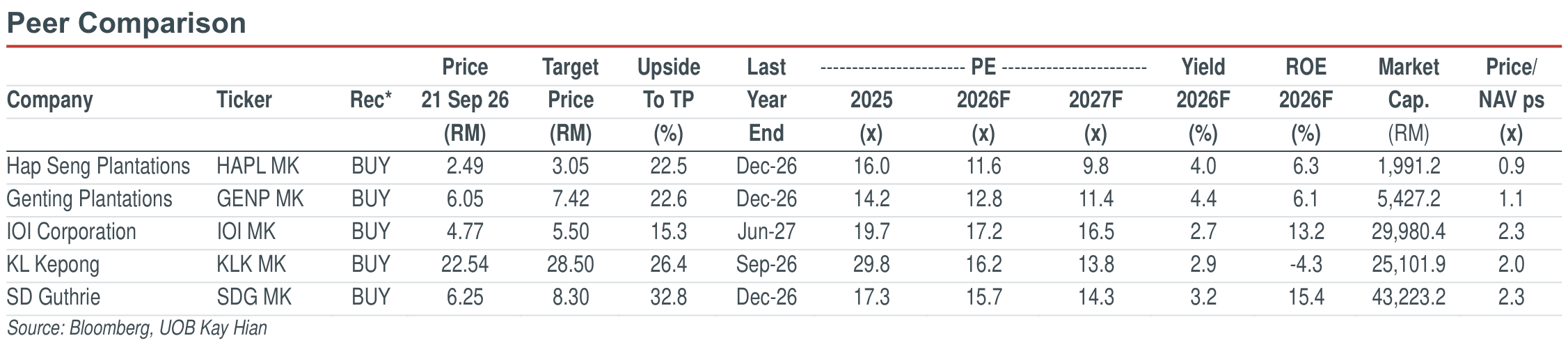
- We raise our 2027 CPO price assumption to RM4,700/tonne from RM4,400, a 6.8% upgrade, and hold 2026 at RM4,500/tonne. We maintain our OVERWEIGHT call on the sector.
- Rainfall already lost during the build-up to El Niño through August is committed to the 2027 harvest; our model cuts Malaysia's 2027 crop by 10.5% and Indonesia's by 2.9%.
- We sit deliberately below the Bursa Malaysia crude palm oil futures curve, which implies an RM4,900-5,200 average for 2027. Demand destruction should cap the move: soft oils already represent 52% of India's vegetable oil imports.
Analysis
- Stocks built on soft exports in 2026. The Malaysian Palm Oil Board's (MPOB) August release put ending stocks at 2.82m tonnes, +7.5% mom and +28.2% yoy, the highest in over two years. The build is mainly due to softer exports: January-August production of 12.63m tonnes was flat yoy and the August print was the fifth consecutive yoy decline. We close 2026 at 19.67m tonnes, inside MPOB's 19.50m-19.80m guidance.
- The supply shock is already in the ground. The relative oceanic Niño index (RONI) read +1.36 in July and is building at 0.39/month against a best historical build of 0.323; the US Climate Prediction Center puts a 75% probability on a +2.5 peak in October-December, above every event since 1950. August palm-belt rainfall was 53% below normal, the second driest since 1950. Palm's lag structure carries that deficit into the 2027 harvest, and five of six prior episodes with crop records cut the following crop 7-17% below trend.
- B50 removes exports while adding demand domestically. Indonesia's 50% palm-based biodiesel mandate reaches full pump coverage on 1 October, absorbing roughly 17m tonnes a year, about 35% of national output and some 3m more than B40. We put Indonesian exports at 22.99m tonnes in 2027, down 10.6% yoy, against 24m-28m historically. A palm-gasoil spread of -US$195/tonne means biodiesel output would not require subsidies, making the mandate enforceable.
- The balance tightens sharply in 2027. We take Malaysian output down 4.0% to 18.88m tonnes and Indonesian output down 3.0% to 52.87m tonnes due to El Niño, against Indonesian domestic disappearance up 9.8% to 30.88m tonnes on biodiesel. Combined ending stocks fall to 2.67m tonnes from 5.76m and Malaysia's stocks-to-use ratio drops to 4.6% from 15.5%.
Highlights
- We raise our 2027 CPO price assumption to RM4,700/tonne from RM4,400, a 6.8% upgrade, and hold 2026 at RM4,500/tonne. We maintain our OVERWEIGHT call on the sector.
- Rainfall already lost during the build-up to El Niño through August is committed to the 2027 harvest; our model cuts Malaysia's 2027 crop by 10.5% and Indonesia's by 2.9%.
- We sit deliberately below the Bursa Malaysia crude palm oil futures curve, which implies an RM4,900-5,200 average for 2027. Demand destruction should cap the move: soft oils already represent 52% of India's vegetable oil imports.
Analysis
- Stocks built on soft exports in 2026. The Malaysian Palm Oil Board's (MPOB) August release put ending stocks at 2.82m tonnes, +7.5% mom and +28.2% yoy, the highest in over two years. The build is mainly due to softer exports: January-August production of 12.63m tonnes was flat yoy and the August print was the fifth consecutive yoy decline. We close 2026 at 19.67m tonnes, inside MPOB's 19.50m-19.80m guidance.
- The supply shock is already in the ground. The relative oceanic Niño index (RONI) read +1.36 in July and is building at 0.39/month against a best historical build of 0.323; the US Climate Prediction Center puts a 75% probability on a +2.5 peak in October-December, above every event since 1950. August palm-belt rainfall was 53% below normal, the second driest since 1950. Palm's lag structure carries that deficit into the 2027 harvest, and five of six prior episodes with crop records cut the following crop 7-17% below trend.
- B50 removes exports while adding demand domestically. Indonesia's 50% palm-based biodiesel mandate reaches full pump coverage on 1 October, absorbing roughly 17m tonnes a year, about 35% of national output and some 3m more than B40. We put Indonesian exports at 22.99m tonnes in 2027, down 10.6% yoy, against 24m-28m historically. A palm-gasoil spread of -US$195/tonne means biodiesel output would not require subsidies, making the mandate enforceable.
- The balance tightens sharply in 2027. We take Malaysian output down 4.0% to 18.88m tonnes and Indonesian output down 3.0% to 52.87m tonnes due to El Niño, against Indonesian domestic disappearance up 9.8% to 30.88m tonnes on biodiesel. Combined ending stocks fall to 2.67m tonnes from 5.76m and Malaysia's stocks-to-use ratio drops to 4.6% from 15.5%.
IMPORTANT NOTICE - DISCLOSURES AND DISCLAIMERS
This report is provided subject to, and must be read together with, the full Disclosures / Disclaimers available at this link, which are incorporated by reference into this report. In particular, this report is intended for general circulation and informational purposes only and does not constitute personal investment advice or a recommendation to buy or sell any investment product or security. You should independently evaluate the information and, where necessary, seek advice from a qualified financial adviser regarding the suitability of any investment. Analyst certifications required under applicable regulations, including SEC Regulation AC (where relevant), are included in this report. By accessing, receiving or using this report, you acknowledge that you have read, understood and agreed to be bound by the Disclosures / Disclaimers, as may be amended, supplemented or updated from time to time.


