

Periodic/Sector reports
Banking: ESG: Assessing TNFD Readiness
OVERWEIGHT (Maintained)
Analyst
Analyst
Highlights
- Nature-related exposure is material: 54% of RM816b commercial loans have high ecosystem dependency, while 36% have high environmental pressure.
- CIMB and Public Bank show relatively developed readiness, while Maybank benefits from lower exposure and peers remain at varying stages.
- Near-term earnings impact should be limited, but regulation is the key medium-term catalyst to embed nature into borrower assessment. Maintain OVERWEIGHT.
Analysis
- Nature-related risk is becoming increasingly relevant to conventional credit risk. Malaysian banks have meaningful exposure to sectors that depend on ecosystem services or exert pressure on nature, with palm oil and construction particularly relevant. The financial implications should emerge progressively through borrower selection, loan pricing, portfolio composition and, potentially, asset quality rather than through an immediate earnings impact.
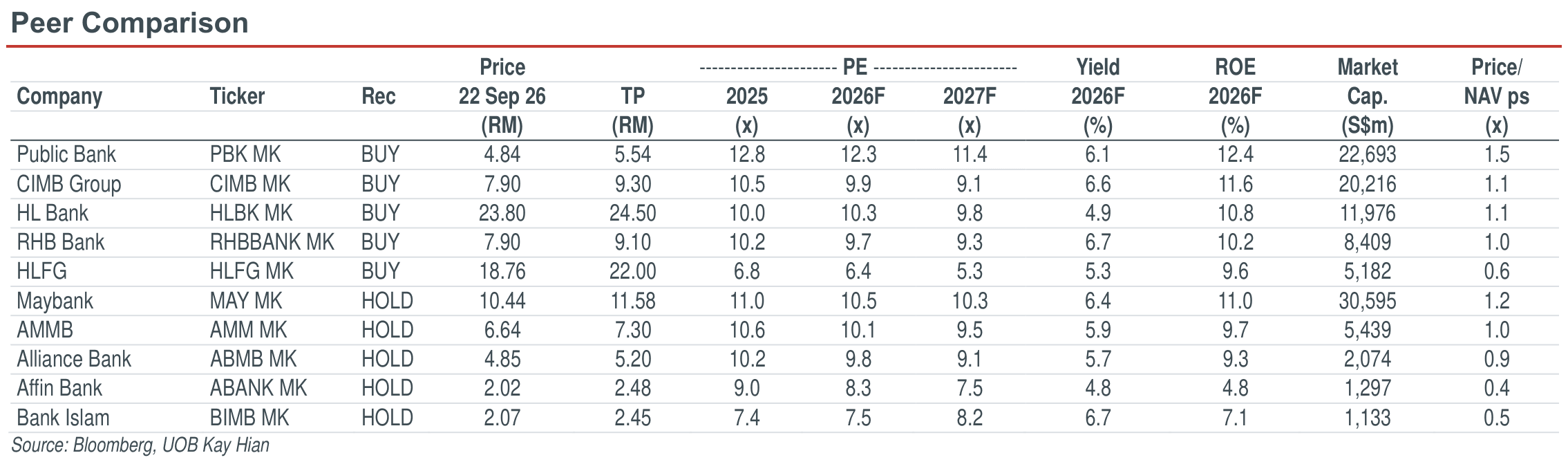
- Bank-level differentiation reflects both exposure and readiness. Our peer assessment combines exposure to nature-sensitive sectors with publicly disclosed evidence of Taskforce on Nature-related Financial Disclosures (TNFD) reporting, nature integration in credit-risk processes and nature-related targets or metrics. CIMB currently shows the strongest disclosed readiness, with Public Bank also relatively advanced, while the remaining banks are at different stages of implementation.
- Regulation could accelerate the transition from disclosure to credit decisions. Current Malaysian nature-related assessment remains less developed than climate-risk management. As supervisory guidance, taxonomy requirements and disclosure expectations evolve, banks with established nature-risk data and credit processes should face a smaller implementation gap.
- Nature finance also creates an emerging opportunity. Beyond managing downside risk, banks may increasingly finance sustainable agriculture, water management, ecosystem restoration and other nature-positive activities as customer and regulatory demand develops.
Highlights
- Nature-related exposure is material: 54% of RM816b commercial loans have high ecosystem dependency, while 36% have high environmental pressure.
- CIMB and Public Bank show relatively developed readiness, while Maybank benefits from lower exposure and peers remain at varying stages.
- Near-term earnings impact should be limited, but regulation is the key medium-term catalyst to embed nature into borrower assessment. Maintain OVERWEIGHT.
Analysis
- Nature-related risk is becoming increasingly relevant to conventional credit risk. Malaysian banks have meaningful exposure to sectors that depend on ecosystem services or exert pressure on nature, with palm oil and construction particularly relevant. The financial implications should emerge progressively through borrower selection, loan pricing, portfolio composition and, potentially, asset quality rather than through an immediate earnings impact.
- Bank-level differentiation reflects both exposure and readiness. Our peer assessment combines exposure to nature-sensitive sectors with publicly disclosed evidence of Taskforce on Nature-related Financial Disclosures (TNFD) reporting, nature integration in credit-risk processes and nature-related targets or metrics. CIMB currently shows the strongest disclosed readiness, with Public Bank also relatively advanced, while the remaining banks are at different stages of implementation.
- Regulation could accelerate the transition from disclosure to credit decisions. Current Malaysian nature-related assessment remains less developed than climate-risk management. As supervisory guidance, taxonomy requirements and disclosure expectations evolve, banks with established nature-risk data and credit processes should face a smaller implementation gap.
- Nature finance also creates an emerging opportunity. Beyond managing downside risk, banks may increasingly finance sustainable agriculture, water management, ecosystem restoration and other nature-positive activities as customer and regulatory demand develops.
OVERWEIGHT (Maintained)
Analyst
Analyst
IMPORTANT NOTICE - DISCLOSURES AND DISCLAIMERS
This report is provided subject to, and must be read together with, the full Disclosures / Disclaimers available at this link, which are incorporated by reference into this report. In particular, this report is intended for general circulation and informational purposes only and does not constitute personal investment advice or a recommendation to buy or sell any investment product or security. You should independently evaluate the information and, where necessary, seek advice from a qualified financial adviser regarding the suitability of any investment. Analyst certifications required under applicable regulations, including SEC Regulation AC (where relevant), are included in this report. By accessing, receiving or using this report, you acknowledge that you have read, understood and agreed to be bound by the Disclosures / Disclaimers, as may be amended, supplemented or updated from time to time.


