

Periodic/Sector reports
China Property Beijing Further Eases Home Purchase Restrictions After Underperforming Other Tier 1 Cities
Analyst
Analyst
Highlights
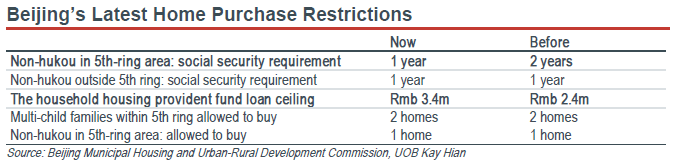
- Beijing further relaxed home purchase restrictions on 8 August, cutting the social-security requirement for non-hukou buyers inside the Fifth Ring from two years to one and raising the provident-fund loan cap to Rmb3.4m.Beijing, Shanghai and Shenzhen now all have a social security requirement of just one year.
- High-frequency data for the first nine days of Aug 26 showed demand narrowing further towards Tier 1 cities. New-home sales in the four Tier 1
cities rose 17% yoy while Tier 2 cities fell 17%, leaving 19 major cities down 8% yoy. On a ytd basis (as of 9 August), Tier 1/2 cities changed by +3%/-8% yoy respectively. Second-hand transactions in three Tier 1 cities rose 8% yoy, but the gain came from Shanghai alone, while nine Tier 2 cities fell 8% yoy. Meanwhile, second-hand home prices continued to trend downward.
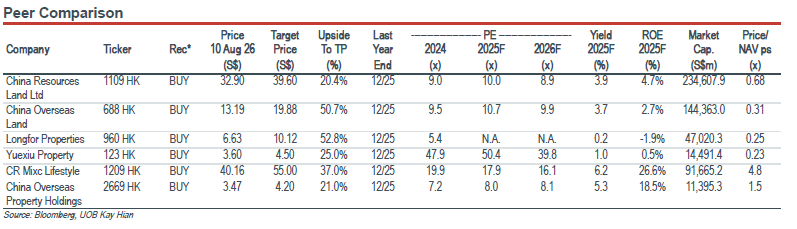
- Maintain UNDERWEIGHT. Our top picks are COLI and CR Mixc.
Analysis
- Beijing further relaxed its home purchase restrictions on 8 August. Beijing has cut the social-security requirement for non-hukou buyers inside
the Fifth Ring from two years to one, and lifted the provident-fund loan cap to Rmb3.4m.
- We believe Beijing’s latest measures are positive for both the property market and real estate equities. The July Politburo meeting called for”
effectively strengthening the safety net and stabilising the property market” (“切实筑牢安全屏障 … 稳定房地产市场”). Beijing has promptly followed up with further measures to support the real estate sector. We expect more local governments - and potentially central government ministries - to introduce additional supportive policies, following Beijing’s lead. This should underpin a further recovery in both transaction volumes and investor sentiment. As of Aug 26, the minimum social security requirement for non-hukou households to purchase homes in all of Beijing, Shanghai and Shenzhen has been lowered to one year.
- High-frequency data for the first nine days of Aug 26 showed new-home sales in 19 major cities declining 8% yoy, as a 17% yoy gain in Tier 1 cities was more than offset by a 17% yoy decline in Tier 2 cities. Secondhand transactions told the same story: three Tier 1 cities rose 8% yoy against nine Tier 2 cities that declined 8% yoy. Meanwhile, overall housing prices continued to trend downward. We see that Beijing underperformed other Tier 1 cities in terms of both property price and new home sales yoy growth (ytd).
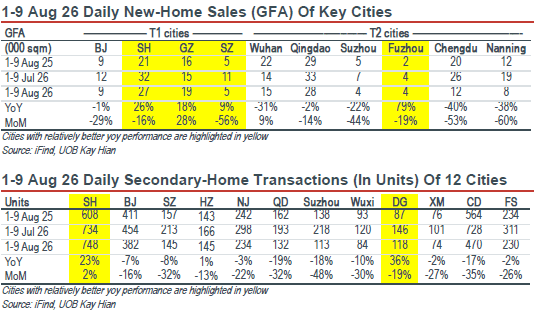
- New-home sales in 19 major cities fell 8% yoy in 1-9 Aug 26. Average daily new-home sales in Tier 1/2 cities changed by +17%/-17% yoy
respectively, against +16%/+4% yoy in Jul 26 - the gap between the two tiers widened sharply. Among Tier 1 cities,
Beijing/Shanghai/Guangzhou/Shenzhen recorded yoy sales changes of - 1%/+26%/+18%/+9% respectively. On a ytd basis (as of 9 August), average daily new-home sales in 19 major cities fell 4% yoy, with Tier 1/2 cities changing by +3%/-8% yoy respectively. Among Tier 1 cities,
Beijing/Shanghai/Guangzhou/Shenzhen recorded yoy sales changes of - 2%/+6%/+2%/+2% respectively. Beijing showed the worst new-home sales performance among Tier 1 cities. Overall, Tier 1 momentum held into Aug 26while Tier 2 cities swung from a modest gain in Jul 26 to a 17% yoy decline, which suggests the recovery is narrowing.
- Second-hand transactions in Tier 1 cities stayed positive, but the strength narrowed to Shanghai while Tier 2 cities weakened. During 1-9 Aug
26, average daily sales of second-hand homes in three Tier 1 cities rose 8% yoy while nine Tier 2 cities fell 8% yoy. Beijing/Shanghai/Shenzhen changed by -7%/+23%/-8% yoy respectively, against +12%/+19%/+4% yoy in Jul 26 - Shanghai is now the only one of the three to still see growth. On a ytd basis (as of 9 August), three Tier 1 cities rose 10% yoy while nine Tier 2 cities fell 5% yoy; Beijing/Shanghai/Shenzhen rose 6%/14%/2% yoy respectively. Overall, Tier 1 second-hand demand is no longer broad-based, and we still see no signs of the recovery spreading to Tier 2 cities.
- Overall price trends remained on a downward trajectory. According to theICE Index updated on 9 August, average listing prices of second-hand homes in 100 major cities fell 0.1% wow and 0.5% mom. Among the four Tier 1 cities, the listing price index of Beijing /Shanghai /Guangzhou /Shenzhen fell 0.1%/0.0%/0.3%/0.0% wow, changed by -0.6%/+0.0%/-0.7%/-0.5% mom, and changed by -2.8%/+1.6%/-2.7%/-1.5% ytd respectively. Beijing underperformed other tier 1 cities in terms of property price as well.
- All four Tier 1 cities have seen their inventory months decline from the Feb-Mar 26 peak. As of 9 Aug 26, saleable GFA in Beijing/ Shanghai/ Guangzhou/Shenzhen changed by -20.3%/+0.4%/-11.4%/- 28.4% yoy, respectively, and inventory months declined by 2.2/0.8/2.2/7.7 months ytd. In Shanghai, where saleable GFA was little changed, stronger new-home sales were the main driver of the decline in inventory months.
Highlights
- Beijing further relaxed home purchase restrictions on 8 August, cutting the social-security requirement for non-hukou buyers inside the Fifth Ring from two years to one and raising the provident-fund loan cap to Rmb3.4m.Beijing, Shanghai and Shenzhen now all have a social security requirement of just one year.
- High-frequency data for the first nine days of Aug 26 showed demand narrowing further towards Tier 1 cities. New-home sales in the four Tier 1
cities rose 17% yoy while Tier 2 cities fell 17%, leaving 19 major cities down 8% yoy. On a ytd basis (as of 9 August), Tier 1/2 cities changed by +3%/-8% yoy respectively. Second-hand transactions in three Tier 1 cities rose 8% yoy, but the gain came from Shanghai alone, while nine Tier 2 cities fell 8% yoy. Meanwhile, second-hand home prices continued to trend downward.
- Maintain UNDERWEIGHT. Our top picks are COLI and CR Mixc.
Analysis
- Beijing further relaxed its home purchase restrictions on 8 August. Beijing has cut the social-security requirement for non-hukou buyers inside
the Fifth Ring from two years to one, and lifted the provident-fund loan cap to Rmb3.4m.
- We believe Beijing’s latest measures are positive for both the property market and real estate equities. The July Politburo meeting called for”
effectively strengthening the safety net and stabilising the property market” (“切实筑牢安全屏障 … 稳定房地产市场”). Beijing has promptly followed up with further measures to support the real estate sector. We expect more local governments - and potentially central government ministries - to introduce additional supportive policies, following Beijing’s lead. This should underpin a further recovery in both transaction volumes and investor sentiment. As of Aug 26, the minimum social security requirement for non-hukou households to purchase homes in all of Beijing, Shanghai and Shenzhen has been lowered to one year.
- High-frequency data for the first nine days of Aug 26 showed new-home sales in 19 major cities declining 8% yoy, as a 17% yoy gain in Tier 1 cities was more than offset by a 17% yoy decline in Tier 2 cities. Secondhand transactions told the same story: three Tier 1 cities rose 8% yoy against nine Tier 2 cities that declined 8% yoy. Meanwhile, overall housing prices continued to trend downward. We see that Beijing underperformed other Tier 1 cities in terms of both property price and new home sales yoy growth (ytd).
- New-home sales in 19 major cities fell 8% yoy in 1-9 Aug 26. Average daily new-home sales in Tier 1/2 cities changed by +17%/-17% yoy
respectively, against +16%/+4% yoy in Jul 26 - the gap between the two tiers widened sharply. Among Tier 1 cities,
Beijing/Shanghai/Guangzhou/Shenzhen recorded yoy sales changes of - 1%/+26%/+18%/+9% respectively. On a ytd basis (as of 9 August), average daily new-home sales in 19 major cities fell 4% yoy, with Tier 1/2 cities changing by +3%/-8% yoy respectively. Among Tier 1 cities,
Beijing/Shanghai/Guangzhou/Shenzhen recorded yoy sales changes of - 2%/+6%/+2%/+2% respectively. Beijing showed the worst new-home sales performance among Tier 1 cities. Overall, Tier 1 momentum held into Aug 26while Tier 2 cities swung from a modest gain in Jul 26 to a 17% yoy decline, which suggests the recovery is narrowing.
- Second-hand transactions in Tier 1 cities stayed positive, but the strength narrowed to Shanghai while Tier 2 cities weakened. During 1-9 Aug
26, average daily sales of second-hand homes in three Tier 1 cities rose 8% yoy while nine Tier 2 cities fell 8% yoy. Beijing/Shanghai/Shenzhen changed by -7%/+23%/-8% yoy respectively, against +12%/+19%/+4% yoy in Jul 26 - Shanghai is now the only one of the three to still see growth. On a ytd basis (as of 9 August), three Tier 1 cities rose 10% yoy while nine Tier 2 cities fell 5% yoy; Beijing/Shanghai/Shenzhen rose 6%/14%/2% yoy respectively. Overall, Tier 1 second-hand demand is no longer broad-based, and we still see no signs of the recovery spreading to Tier 2 cities.
- Overall price trends remained on a downward trajectory. According to theICE Index updated on 9 August, average listing prices of second-hand homes in 100 major cities fell 0.1% wow and 0.5% mom. Among the four Tier 1 cities, the listing price index of Beijing /Shanghai /Guangzhou /Shenzhen fell 0.1%/0.0%/0.3%/0.0% wow, changed by -0.6%/+0.0%/-0.7%/-0.5% mom, and changed by -2.8%/+1.6%/-2.7%/-1.5% ytd respectively. Beijing underperformed other tier 1 cities in terms of property price as well.
- All four Tier 1 cities have seen their inventory months decline from the Feb-Mar 26 peak. As of 9 Aug 26, saleable GFA in Beijing/ Shanghai/ Guangzhou/Shenzhen changed by -20.3%/+0.4%/-11.4%/- 28.4% yoy, respectively, and inventory months declined by 2.2/0.8/2.2/7.7 months ytd. In Shanghai, where saleable GFA was little changed, stronger new-home sales were the main driver of the decline in inventory months.
Analyst
Analyst
IMPORTANT NOTICE - DISCLOSURES AND DISCLAIMERS
This report is provided subject to, and must be read together with, the full Disclosures / Disclaimers available at this link, which are incorporated by reference into this report. In particular, this report is intended for general circulation and informational purposes only and does not constitute personal investment advice or a recommendation to buy or sell any investment product or security. You should independently evaluate the information and, where necessary, seek advice from a qualified financial adviser regarding the suitability of any investment. Analyst certifications required under applicable regulations, including SEC Regulation AC (where relevant), are included in this report. By accessing, receiving or using this report, you acknowledge that you have read, understood and agreed to be bound by the Disclosures / Disclaimers, as may be amended, supplemented or updated from time to time.
Related articles

8 Sept 2026
China Property: Shanghai Shifts Housing Supply From New Build To Renewal; National Land Supply Keeps Shrinking

30 Sept 2026
China Property: First Central Mortgage Interest Subsidy From 1 Oct 26; Tier 1 Land Supply Up 12% mom In Sep 26

23 Sept 2026
China Property: NBS Publishes Inaugural Second-Hand Transactions Data; Household Mortgage Borrowing Is Still Shrinking
Our latest research
30 Sept 2026
China Property: First Central Mortgage Interest Subsidy From 1 Oct 26; Tier 1 Land Supply Up 12% mom In Sep 26

30 Sept 2026
IT Hardware: Company Visit Takeaways From Phison And Winbond

29 Sept 2026