

Company Coverage
Economics: PMI Back In Contraction As Demand Weakens
Analyst
Analyst
Highlights
- July's manufacturing PMI fell to 49.2 (-1.1ppt mom), below Bloomberg's consensus of 50.1, as the new orders sub-index dropped to 48.5 (-2.7ppt mom) and the manufacturing output sub-index slipped back into contraction at 49.9 (-1.5ppt mom). The new export orders index also eased, but only to 49.6 (-0.5ppt mom), suggesting the weakness was led by domestic demand.
- Non-manufacturing PMI fell to 49.0 (-1.2ppt mom), also below Bloomberg's consensus of 50.0, dragged by the construction industry index at 47.0 (-2.0ppt mom), a fresh cycle low, while the services industry index returned to contraction at 49.3 (-1.1ppt mom).
- The composite indices for all three enterprise sizes fell below 50 for the first time since Nov 25. The July Politburo meeting confirmed that there will be further demand-supportive measures in 2H26.
What's New
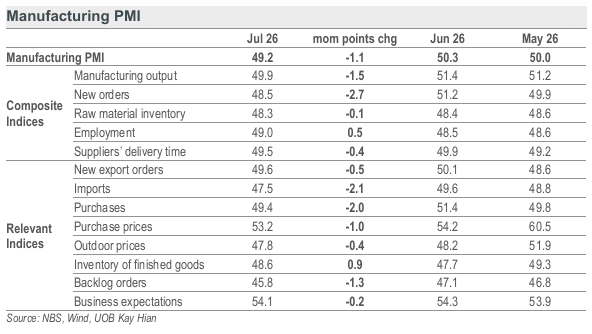
- July's manufacturing PMI fell into the contractionary zone to 49.2 (-1.1ppt mom), 0.9ppt below Bloomberg's consensus of 50.1. The new orders sub-index dropped to 48.5 (-2.7ppt mom), while the manufacturing output sub index slipped back into contraction at 49.9 (-1.5ppt mom). The new export orders index also eased to 49.6 (-0.5ppt mom), but its smaller decline suggests the weakness was mainly led by domestic demand. The purchases index fell to 49.4 (-2.0ppt mom) and the imports index to 47.5 (-2.1ppt mom), pointing to more cautious input procurement, while the inventory of finished goods index rose to 48.6 (+0.9ppt mom), pointing to slower rundown of inventory. On the cost front, the purchase prices index eased to 53.2 (-1.0pt mom) but stayed expansionary, while the outdoor prices index fell further to 47.8 (-0.4pt mom), remaining in contractionary territory. With input costs still rising and output prices still falling, margin pressure persists. The employment sub-index rose to 49.0 (+0.5ppt mom), the only composite index to improve, with the business expectations index held at 54.1 (-0.2ppt mom).
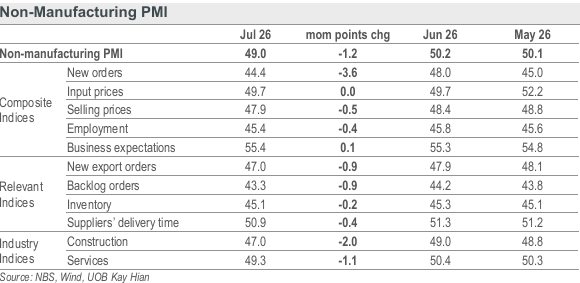
- Non-manufacturing PMI fell to 49.0 (-1.2pt mom), 1.0ppt below Bloomberg's consensus of 50.0. Construction industry index contracted sharply to 47.0 (-2.0ppt mom), a fresh cycle low, partly reflecting seasonal summer disruption to site activity, as seen in Jul 25 (-2.2ppt mom), but also showed continued property sector weakness. The services industry index slipped back below the threshold to 49.3 (-1.1ppt mom). The new orders sub index fell to 44.4 (-3.6ppt mom), more than reversing June's gain, while the new export orders index for services eased to 47.0 (-0.9ppt mom). The input prices sub-index held flat at 49.7 (0.0ppt mom) against a softer selling prices sub-index (47.9, -0.5ppt mom), widening the gap to 1.8ppt and pointing to renewed margin pressure. The business expectations sub-index was resilient at 55.4 (+0.1ppt mom).
- Enterprise PMI weakened across the board. The large-sized enterprises composite index fell into contraction at 49.5 (-1.2pt mom), its first sub-50 reading since Nov 25 and the largest decline across firm sizes. The medium sized enterprises composite index slipped to 49.7 (-0.8pt mom), giving up June's brief return to expansion. The small-sized enterprises composite index declined to 47.4 (-0.8pt mom), still lagging the other two.
- July's PMI data is a clear negative surprise, with both headline readings missing consensus and returning to contraction. The weakness was mainly led by domestic demand, as new orders sub-indices in both sectors fell sharply and the construction industry index hit a cycle low, while manufacturing export orders eased marginally. With seasonality only partly explaining the decline, the July Politburo meeting confirmed that there will be further demand-supportive measures in 2H26.

Highlights
- July's manufacturing PMI fell to 49.2 (-1.1ppt mom), below Bloomberg's consensus of 50.1, as the new orders sub-index dropped to 48.5 (-2.7ppt mom) and the manufacturing output sub-index slipped back into contraction at 49.9 (-1.5ppt mom). The new export orders index also eased, but only to 49.6 (-0.5ppt mom), suggesting the weakness was led by domestic demand.
- Non-manufacturing PMI fell to 49.0 (-1.2ppt mom), also below Bloomberg's consensus of 50.0, dragged by the construction industry index at 47.0 (-2.0ppt mom), a fresh cycle low, while the services industry index returned to contraction at 49.3 (-1.1ppt mom).
- The composite indices for all three enterprise sizes fell below 50 for the first time since Nov 25. The July Politburo meeting confirmed that there will be further demand-supportive measures in 2H26.
What's New
- July's manufacturing PMI fell into the contractionary zone to 49.2 (-1.1ppt mom), 0.9ppt below Bloomberg's consensus of 50.1. The new orders sub-index dropped to 48.5 (-2.7ppt mom), while the manufacturing output sub index slipped back into contraction at 49.9 (-1.5ppt mom). The new export orders index also eased to 49.6 (-0.5ppt mom), but its smaller decline suggests the weakness was mainly led by domestic demand. The purchases index fell to 49.4 (-2.0ppt mom) and the imports index to 47.5 (-2.1ppt mom), pointing to more cautious input procurement, while the inventory of finished goods index rose to 48.6 (+0.9ppt mom), pointing to slower rundown of inventory. On the cost front, the purchase prices index eased to 53.2 (-1.0pt mom) but stayed expansionary, while the outdoor prices index fell further to 47.8 (-0.4pt mom), remaining in contractionary territory. With input costs still rising and output prices still falling, margin pressure persists. The employment sub-index rose to 49.0 (+0.5ppt mom), the only composite index to improve, with the business expectations index held at 54.1 (-0.2ppt mom).
- Non-manufacturing PMI fell to 49.0 (-1.2pt mom), 1.0ppt below Bloomberg's consensus of 50.0. Construction industry index contracted sharply to 47.0 (-2.0ppt mom), a fresh cycle low, partly reflecting seasonal summer disruption to site activity, as seen in Jul 25 (-2.2ppt mom), but also showed continued property sector weakness. The services industry index slipped back below the threshold to 49.3 (-1.1ppt mom). The new orders sub index fell to 44.4 (-3.6ppt mom), more than reversing June's gain, while the new export orders index for services eased to 47.0 (-0.9ppt mom). The input prices sub-index held flat at 49.7 (0.0ppt mom) against a softer selling prices sub-index (47.9, -0.5ppt mom), widening the gap to 1.8ppt and pointing to renewed margin pressure. The business expectations sub-index was resilient at 55.4 (+0.1ppt mom).
- Enterprise PMI weakened across the board. The large-sized enterprises composite index fell into contraction at 49.5 (-1.2pt mom), its first sub-50 reading since Nov 25 and the largest decline across firm sizes. The medium sized enterprises composite index slipped to 49.7 (-0.8pt mom), giving up June's brief return to expansion. The small-sized enterprises composite index declined to 47.4 (-0.8pt mom), still lagging the other two.
- July's PMI data is a clear negative surprise, with both headline readings missing consensus and returning to contraction. The weakness was mainly led by domestic demand, as new orders sub-indices in both sectors fell sharply and the construction industry index hit a cycle low, while manufacturing export orders eased marginally. With seasonality only partly explaining the decline, the July Politburo meeting confirmed that there will be further demand-supportive measures in 2H26.
Analyst
Analyst
IMPORTANT NOTICE - DISCLOSURES AND DISCLAIMERS
This report is provided subject to, and must be read together with, the full Disclosures / Disclaimers available at the following link: https://research-api.uobkayhian.com/assets/disclaimer/df64a6ea-7980-447c-ae9e-fd19b93257dc, which are incorporated by reference into this report. In particular, this report is intended for general circulation and informational purposes only and does not constitute personal investment advice or a recommendation to buy or sell any investment product or security. You should independently evaluate the information and, where necessary, seek advice from a qualified financial adviser regarding the suitability of any investment. Analyst certifications required under applicable regulations, including SEC Regulation AC (where relevant), are included in this report. By accessing, receiving or using this report, you acknowledge that you have read, understood and agreed to be bound by the Disclosures / Disclaimers, as may be amended, supplemented or updated from time to time.
Related articles

27 Aug 2026
Haidilao International Holding (6862 HK): 1H26: Operating Profit Beats But Net Profit Misses; Dividend A Surprise; Main Brand Steady Expansion And Sub-Brand Enters Replication Stage

2 Sept 2026


