

Periodic/Sector reports
Plantation: EUDR Update: Key Facts Before December Implementation
Highlights
- The EUDR applies to large and medium operators from 30 Dec 26 and to micro and small enterprises from 30 Jun 27.
- With MSPO being the only national scheme recognised by the EU, Malaysian plantation companies are poised to benefit from a higher share of exports to the EU.
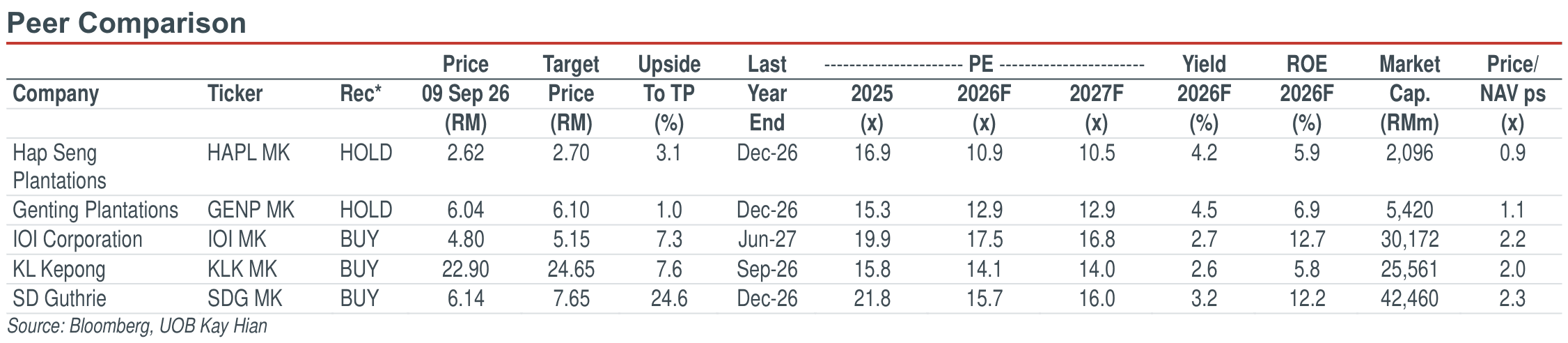
- Maintain OVERWEIGHT. EU palm oil imports keep shrinking on biofuel policy, not EUDR, leaving a smaller food-and-oleochemical pool where verified traceability earns market share. SD Guthrie and KL Kepong remain our top picks.
Analysis
- The EUDR applies to large and medium operators from 30 Dec 26 and to micro and small enterprises from 30 Jun 27. The mandated simplification review, delivered 4 May 26, declined to reopen the text or move the dates.
- Malaysia is rated as standard risk. To recap, Malaysia is classified as a standard risk country under the European Union Deforestation Regulation (EUDR), alongside other major vegoils producers including Indonesia, Argentina and Brazil, which will be subject to 3% annual compliance checks, compared with 1% for low risk countries. Malaysia continues to pursue low-risk status with traceability across supply chain as the key focus area particularly among small independent holders. The National Traceability System (SKN), which integrates e-MSPO, GeoSAWIT and SIMS into a unified platform, enables EUDR-relevant information, such as certification data, geolocation coordinates and verified transactions, to be centrally accessed and shared with EU partners.
- A delegated act adopted on 13 Jul 26 adds palm oil derivatives to Annex I, including fatty alcohols, glycerol, oleic, linoleic and linolenic acids, amines and soaps, effective 30 Dec 27. Malaysian Sustainable Palm Oil (MSPO) has been recognised by the EU since 5 Sep 25, the only national scheme with such a status.
- EU palm oil imports fell to about 2.85m tonnes in 2025/26, down just over 5% yoy, as member states exclude palm-based biofuel from national quota obligations. The decline has slowed from -21% to -5% as a result, with the balance represented by food, feed and oleochemical demand, which is contract-based and is more tightly monitored under EUDR.
- EU’s origin mix is turning towards Malaysia. Over Jul 25 to early-Mar 26, Malaysian shipments rose about 4% to 484,000 tonnes while Indonesia fell about 8% to 597,400 tonnes. The Netherlands’ +9% reflects Rotterdam and Amsterdam as transit hubs while Italy’s -12% represents the cleaner read on consumption.
Highlights
- The EUDR applies to large and medium operators from 30 Dec 26 and to micro and small enterprises from 30 Jun 27.
- With MSPO being the only national scheme recognised by the EU, Malaysian plantation companies are poised to benefit from a higher share of exports to the EU.
- Maintain OVERWEIGHT. EU palm oil imports keep shrinking on biofuel policy, not EUDR, leaving a smaller food-and-oleochemical pool where verified traceability earns market share. SD Guthrie and KL Kepong remain our top picks.
Analysis
- The EUDR applies to large and medium operators from 30 Dec 26 and to micro and small enterprises from 30 Jun 27. The mandated simplification review, delivered 4 May 26, declined to reopen the text or move the dates.
- Malaysia is rated as standard risk. To recap, Malaysia is classified as a standard risk country under the European Union Deforestation Regulation (EUDR), alongside other major vegoils producers including Indonesia, Argentina and Brazil, which will be subject to 3% annual compliance checks, compared with 1% for low risk countries. Malaysia continues to pursue low-risk status with traceability across supply chain as the key focus area particularly among small independent holders. The National Traceability System (SKN), which integrates e-MSPO, GeoSAWIT and SIMS into a unified platform, enables EUDR-relevant information, such as certification data, geolocation coordinates and verified transactions, to be centrally accessed and shared with EU partners.
- A delegated act adopted on 13 Jul 26 adds palm oil derivatives to Annex I, including fatty alcohols, glycerol, oleic, linoleic and linolenic acids, amines and soaps, effective 30 Dec 27. Malaysian Sustainable Palm Oil (MSPO) has been recognised by the EU since 5 Sep 25, the only national scheme with such a status.
- EU palm oil imports fell to about 2.85m tonnes in 2025/26, down just over 5% yoy, as member states exclude palm-based biofuel from national quota obligations. The decline has slowed from -21% to -5% as a result, with the balance represented by food, feed and oleochemical demand, which is contract-based and is more tightly monitored under EUDR.
- EU’s origin mix is turning towards Malaysia. Over Jul 25 to early-Mar 26, Malaysian shipments rose about 4% to 484,000 tonnes while Indonesia fell about 8% to 597,400 tonnes. The Netherlands’ +9% reflects Rotterdam and Amsterdam as transit hubs while Italy’s -12% represents the cleaner read on consumption.
IMPORTANT NOTICE - DISCLOSURES AND DISCLAIMERS
This report is provided subject to, and must be read together with, the full Disclosures / Disclaimers available at this link, which are incorporated by reference into this report. In particular, this report is intended for general circulation and informational purposes only and does not constitute personal investment advice or a recommendation to buy or sell any investment product or security. You should independently evaluate the information and, where necessary, seek advice from a qualified financial adviser regarding the suitability of any investment. Analyst certifications required under applicable regulations, including SEC Regulation AC (where relevant), are included in this report. By accessing, receiving or using this report, you acknowledge that you have read, understood and agreed to be bound by the Disclosures / Disclaimers, as may be amended, supplemented or updated from time to time.


