

Wealth Daily
Nvidia Leadership Change Tests AI Confidence Despite Strong Earnings
Today’s Must-Know News
Overnight Markets
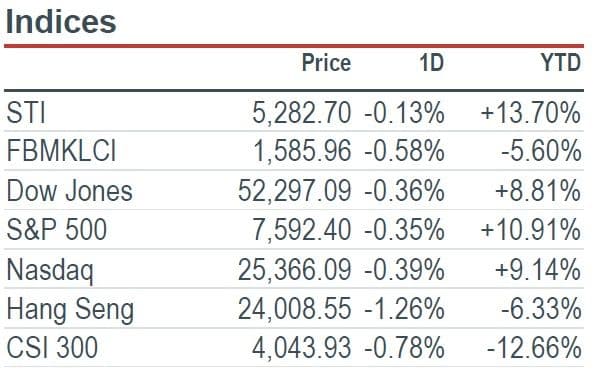
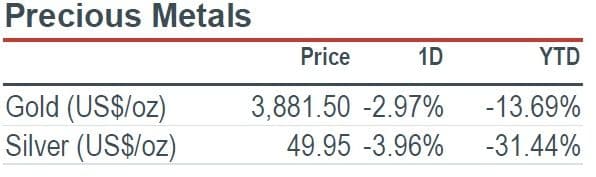
Market Movers: The S&P 500 fell 0.35% on 12 November. Nvidia (NVDA US) lost 4.3% as Jensen Huang resigned and the board appointed Colette Kress interim CEO, while assuring continuity of customer commitments and product roadmaps. Alphabet (GOOGL US) rose 1.8%; Google launched Gemini 4 Hydrogen across its API, app and Search, with flat input/output pricing across a 1m-token context window. Siemens (SIE GY) gained 1.7% following record quarterly orders of €34.8bn, up 58.0%, and industrial profit of €3.9bn, up 22.0%. Its data-centre orders doubled and management lifted its medium-term comparable revenue-growth ambition to 7.0–11.0%. These developments show continuing AI demand alongside greater scrutiny of management continuity, deployment economics and the conversion of investment into earnings. (Nvidia / Google / Reuters / AP / StockAnalysis) Nvidia (NVDA US) is our Core Recommendation, while Alphabet (GOOGL US) is our Investment Opportunity.
Macro: India's October inflation accelerated to 6.09% from 5.54%, above the 5.93% consensus and the RBI's 6.0% tolerance ceiling. UK third-quarter GDP grew 0.7%, versus 0.5% previously. Higher Indian food inflation and resilient UK services activity limit the scope for rapid policy easing despite pressure on household budgets. (Government / ONS / Reuters)
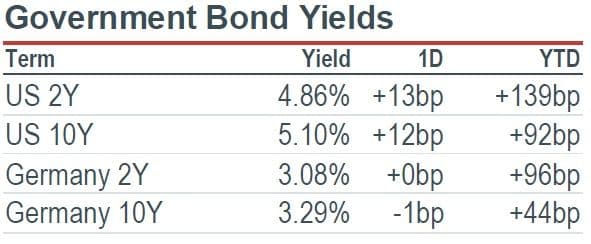
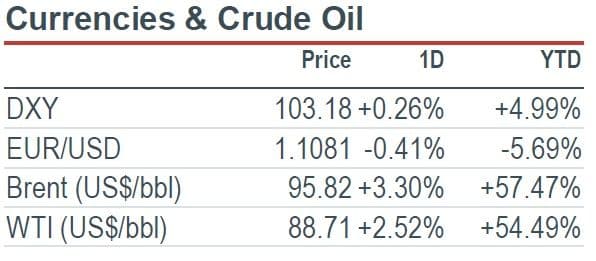
FICC: Brent settled at US$95.82 a barrel, approximately 3.3% higher, keeping energy costs in focus. The US 10-year Treasury yield rose 12bps to 5.10% and the 2-year yield rose 13bps to 4.86%, compared with the Treasury's preceding published reading on 10 November; no reading was published for Veterans Day. Higher energy prices and bond yields remain a demanding combination for duration-sensitive assets. (AP / US Treasury)
AI
- Google lowers the cost of agentic AI. Alphabet (GOOGL US) launched Gemini 4 Hydrogen across its API, enterprise products, app and Search. Pricing is US$1.50 per million input tokens and US$7.50 for output across a 1m-token context window. Google says tasks finish 2.5 times faster than Gemini 3.8 Flash. Lower costs could broaden deployment, although independent performance and customer spending remain unproven. (Google) Alphabet (GOOGL US) is our Investment Opportunity.
- Siemens turns data-centre demand into record orders. Siemens (SIE GY) reported quarterly orders of €34.8bn, up 58.0%, and industrial profit of €3.9bn, up 22.0%, versus €3.7bn expected. Data-centre orders doubled, building a €7.0bn backlog. Management lifted its medium-term comparable revenue-growth ambition to 7.0–11.0% from 6.0–9.0%. Converting this demand into cash remains the key test of a sustained higher growth rate. (Siemens / Reuters)
- Applied Materials guides to another sales increase. Applied Materials (AMAT US) reported fiscal fourth-quarter revenue of US$10.41bn, up 53%, and adjusted EPS of US$4.16, up 92% year on year. Next-quarter guidance is US$11.1bn revenue, plus or minus US$500m, and US$4.35 adjusted EPS, plus or minus US$0.20. Management cited AI investment and chip complexity; customer spending concentration remains a risk. Results followed the regular US close. (Company)
- Nebius confronts capacity delays and rising investment. Nebius (NBIS US) fell 16.8% as capacity delays moved sites into the first half of 2027. Reuters reported narrowed 2026 revenue guidance of US$3.0–3.2bn, then US$12–13bn in 2027 against US$40–45bn capex. Management expects customer prepayments and contract-backed financing to fund 75–85% of spending. Commissioning and funding execution remain the key constraints. (Company / Reuters)
Americas
- Nvidia changes leadership as shares retreat. Nvidia (NVDA US) fell 4.3% as Jensen Huang resigned immediately as CEO, president and director. CFO Colette Kress became interim CEO, retaining her finance role, while the board searches internally and externally for a permanent successor. Nvidia said customer commitments and product roadmaps remain uninterrupted, but the abrupt transition increases execution uncertainty. (Company / AP) Nvidia (NVDA US) is our Core Recommendation.
- Lilly gains Chinese approval for its obesity pill. Eli Lilly (LLY US) won Chinese approval for orforglipron, the country’s first oral GLP-1 weight-loss treatment, Reuters reported. JPMorgan projects the local market could reach RMB30bn in five to seven years, from RMB3–4bn. Tablets could broaden access beyond injections, but Lilly has not disclosed local pricing or launch timing, leaving uptake uncertain. (Reuters) Eli Lilly (LLY US) is our Core Recommendation.
- Microsoft’s outage exposes enterprise continuity risks. Microsoft (MSFT US) investigated widespread Outlook and Microsoft 365 disruption after nearly 130,000 user-submitted outage reports. The company blamed unexpectedly unavailable servers following automated health-check failures and was testing a remedy. (AP / CRN) Microsoft (MSFT US) is our Core Recommendation.
- Meta buys lower-carbon supply-chain capacity. Meta (META US) signed agreements supporting at least 180,000 tons of Sublime’s lower-carbon cement production and a MacroCycle plant targeting 5,000 tons of recycled PET annually. Environmental-attribute certificates fund suppliers without guaranteeing physical delivery to Meta’s data centres. These commitments support commercial-scale capacity, but undisclosed financial terms limit assessment of Meta’s costs and benefits. (Company) Meta (META US) is our Core Recommendation.
- Brookfield expands its recurring fee base. Brookfield (BN CN) reported third-quarter distributable earnings of US$1.72bn, or US$0.73 a share versus US$0.63 a year earlier. Before realisations, per-share earnings rose to US$0.64 from US$0.56. Asset management raised US$25bn; fee-related earnings grew 15% and fee-bearing capital reached US$682bn. Recurring fees support earnings despite uneven transactions, but distributable earnings differ from accounting profit. (Company)
Greater China
- SMIC’s margin outlook tempers strong results. SMIC (0981.HK) posted quarterly revenue of US$3.19bn, up 33.9% year on year, and attributable profit of US$428.4m, up 123.4%. Gross margin reached 29.9% and utilisation 97.3%. Fourth-quarter guidance calls for 4–6% sequential revenue growth but 26–28% margin. Firm domestic foundry demand therefore supports sales, while the outlook cautions against extrapolating recent profitability gains. (Company / Reuters)
- New Singles Day estimates show slower growth. New Syntun estimates put China’s Singles Day festival sales between 7 October and 11 November at RMB1.78tn, up 4.8%, versus 14.2% growth in the preceding festival. AI shopping tools may improve conversion, but slower aggregate growth suggests consumer demand and promotional returns remain under pressure. (Reuters)
- JD completes its European retail acquisition. JD.com (JD US) completed its Ceconomy takeover, buying 59.8% of equity and votes for approximately EUR1.335bn at EUR4.60 per share. Consolidation begins on 12 November, adding more than 1,000 stores across 11 markets. Ceconomy retains local operations and technology infrastructure. Distribution broadens beyond China, but integration costs and execution will determine the financial benefit. (Company)
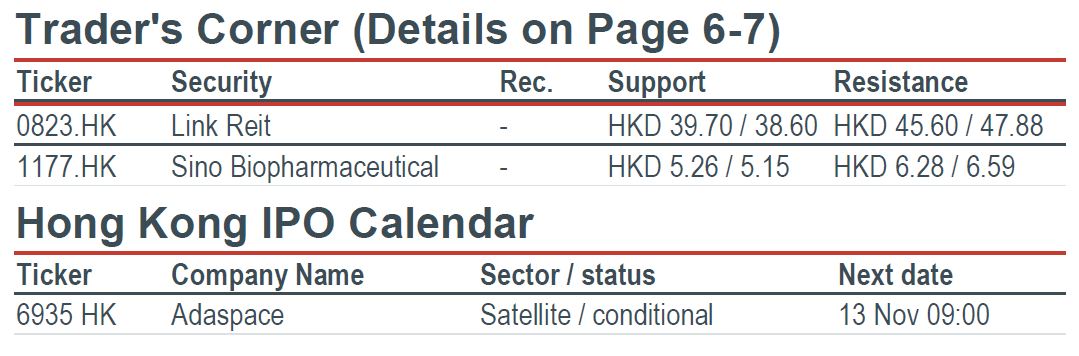
- Link supports distributions despite weak rents. Link REIT (0823.HK) posted interim revenue of HK$6.909bn, down 1.6%, and net property income of HK$5.135bn, down 0.8%. DPU rose 0.3% to 127.25 HK cents as general and administrative expenses fell 20.8%. Hong Kong retail rental reversions were negative 7.5%. Planned second-half buybacks of HK$1–2bn support per-unit returns, but cannot indefinitely offset weak renewals. (Company)
Asia ex. China
- TSMC discloses employee-data exposure. TSMC (TSM US) said current and former employee information was published externally without authorisation, matching a cloud provider’s records. It found no evidence its own systems were compromised; the records excluded operational and customer data. It is supporting personnel and investigating with authorities and specialists. Supplier security remains a risk without established production disruption. (Company / PTS) TSMC (TSM US) is our Core Recommendation.
- Foxconn’s AI expansion consumes cash. Foxconn (2317 TT) posted quarterly revenue of NT$3.016tn, up 46% year on year, and attributable profit of NT$77.5bn, up 34%. It raised outlooks for all four product segments and expects high double-digit AI rack shipment growth in 2027. Nine-month operating cash flow was negative NT$125.7bn; free cash flow was negative NT$287.4bn. Cash conversion and component shortages remain expansion constraints. (Company / Reuters)
- Naver’s AI spending depresses profitability. Naver (035420 KS) posted quarterly revenue of KRW3.472tn, up 10.7%, but operating profit fell 20.9% to KRW451.3bn. Margin narrowed to 13.0% from 18.2% amid infrastructure, content and data spending. Management expects approximately KRW2tn of computing-service contracts to generate revenue from the first half of 2027. Monetisation prospects improve, but the investment-to-revenue timing gap pressures near-term returns. (Company / Aju)
- Currency support lifts Bridgestone’s earnings. Bridgestone (5108 JP) posted nine-month revenue of JPY3.554tn, approximately 10% higher, and adjusted operating profit of JPY445.3bn, up 21%. Attributable profit rose 57% to JPY318.9bn. Currency contributed JPY44bn of the JPY76.9bn adjusted operating-profit increase. The unchanged JPY515bn annual adjusted operating-profit forecast underlines the importance of distinguishing exchange-rate support from durable pricing and volume gains. (Company)
- StarHub’s revenue recovery outpaces earnings. StarHub (CC3 SP) posted quarterly revenue of S$486.8m, up 4.5%, excluding Ensign, but attributable profit fell to S$3.9m from S$22.1m. EBITDA fell 26.3% to S$72.1m; depreciation further weighed on profit. Enterprise service revenue rose 18.4%. Unchanged annual EBITDA guidance at 75–80% of last year’s level makes cost absorption and enterprise monetisation key operating tests. (Company / Business Times)
EMEA and Others
- Rolls-Royce accelerates capital returns as orders expand. Rolls-Royce (RR/ LN) announced an interim £1.5bn buyback within its existing £7.0–9.0bn programme for 2026–28, retaining annual underlying operating-profit guidance of £4.7–4.9bn. Large-engine flying hours rose 4.0% in the first ten months, to 114.0% of 2019 levels. Power Systems orders rose 62.0% over nine months. Delivery capacity and service execution constrain conversion of strong demand into cash. (Rolls-Royce / Reuters)
- Allianz's diversified earnings absorb catastrophe pressure. Allianz (ALV GY) reported quarterly operating profit of €4.7bn, up 6.2%. Asset-management profit rose 35.1% to €1.1bn, cushioning weaker property-and-casualty earnings as the combined ratio deteriorated to 93.8% from 91.9%. These results support the previously announced €18.6bn guidance ceiling. Diversification protects earnings, but higher catastrophe claims increase the importance of underwriting discipline. (Allianz / The Insurer)
- Merck raises guidance as its growth businesses strengthen. Merck KGaA (MRK GY) raised annual EBITDA-pre guidance to €6.2–6.4bn from €5.9–6.3bn and revenue guidance to €21.5–21.9bn. Quarterly sales reached €5.6bn, up 5.1% organically, while EBITDA pre of €1.7bn grew 0.4% organically. Process Solutions, rare diseases and semiconductor materials supported performance. Slower profit growth than sales keeps mix and margins central to the recovery. (Merck / Reuters)
- Adecco's profit beat signals a selective hiring recovery. Adecco (ADEN SW) reported operating income of €180.0m, up 14.0%, versus €166.0m expected, on revenue of about €6.0bn. Permanent recruitment returned to growth; management plans €75.0m of additional annual savings by the third quarter of 2027. Shares closed approximately 14.7% higher. France's revenue decline and slower group organic growth show that hiring conditions remain uneven. (Adecco / Reuters / Reuters close)
- KBC's earnings resilience masks deposit competition. KBC (KBC BB) reported quarterly net profit of €1,142.0m, versus €1,002.0m a year earlier and €1,152.0m in the preceding quarter. Customer deposits, excluding volatile foreign-branch balances, fell 1.0% organically quarter on quarter but grew 3.0% year on year. Government-bond issuance and shifts into asset management explain some outflows, highlighting the trade-off between fee income and funding costs. (KBC)
- Burberry's recovery broadens beyond sales growth. Burberry (BRBY LN) reported quarterly comparable sales growth of 4.0%, versus 3.0% expected. First-half revenue rose 6.0% to £1.1bn and adjusted operating profit reached £62.0m, versus £19.0m previously and £44.0m expected. Margin improved to 5.7% from 1.9%. Better profit conversion supports the turnaround, but negative £147.0m free cash flow keeps inventory and seasonal cash conversion in focus. (Burberry / Reuters)
Traders' Corner
Our Technical View
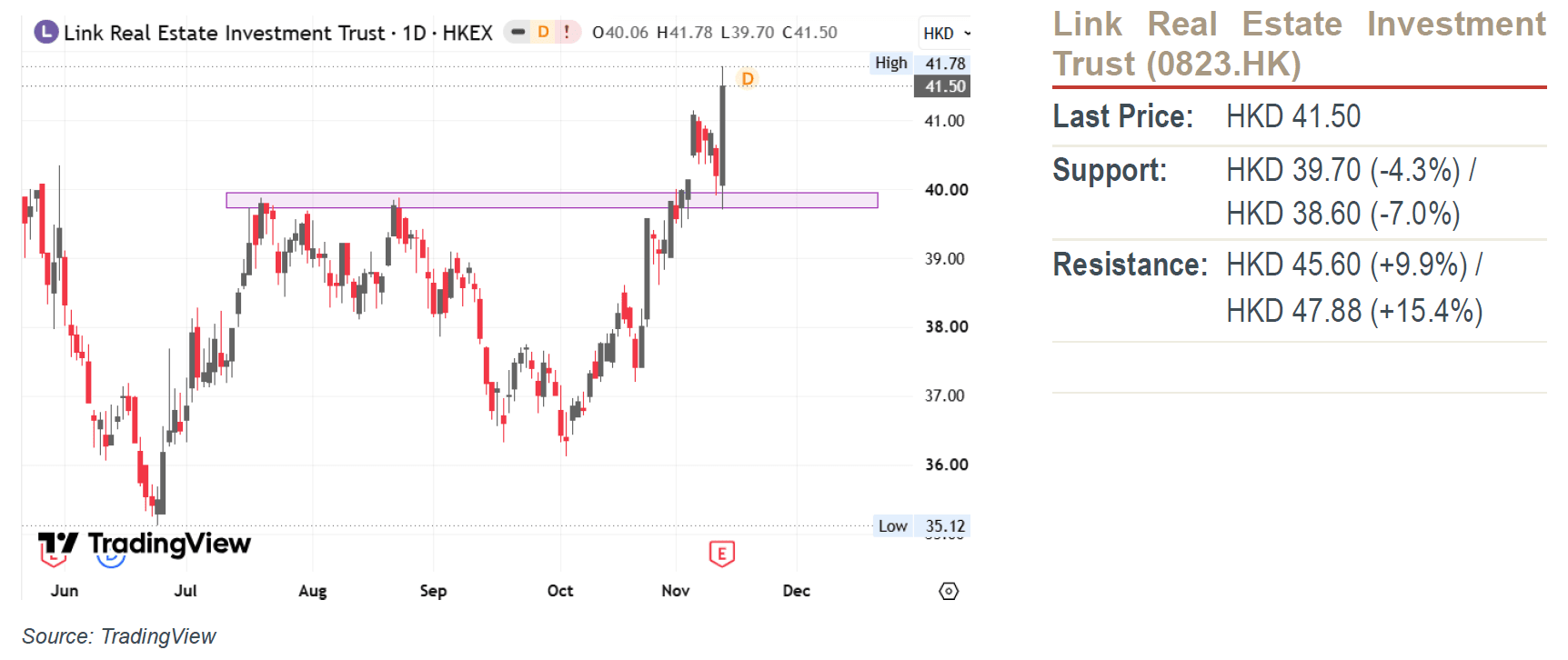
- Price rebounded off its resistance-turned-support baseline with a bullish candle that simultaneously cleared the upper boundary of the flag continuation pattern.
- The RSI is firmly entrenched in bullish territory and is rising with strong positive velocity.
- As long as price remains defended above the converted support baseline, we see sustained upward expansion toward higher swing high resistance.
Our Technical View
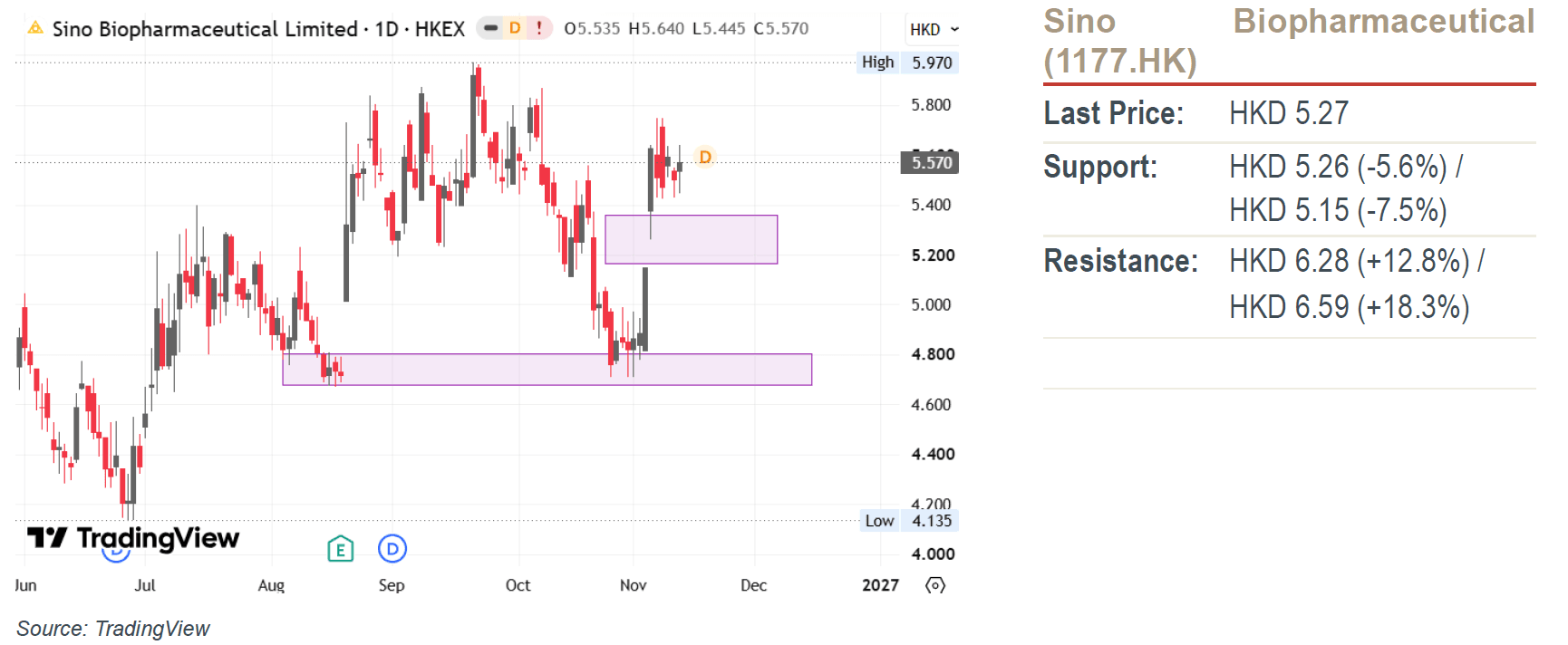
- Price successfully defended its position above the newly established gap-support zone.
- The RSI is anchored in bullish territory and is rising with positive velocity.
- As long as price remains defended above the gap-support threshold, we see continued upward expansion toward higher swing high resistance.
Market Movers: The S&P 500 fell 0.35% on 12 November. Nvidia (NVDA US) lost 4.3% as Jensen Huang resigned and the board appointed Colette Kress interim CEO, while assuring continuity of customer commitments and product roadmaps. Alphabet (GOOGL US) rose 1.8%; Google launched Gemini 4 Hydrogen across its API, app and Search, with flat input/output pricing across a 1m-token context window. Siemens (SIE GY) gained 1.7% following record quarterly orders of €34.8bn, up 58.0%, and industrial profit of €3.9bn, up 22.0%. Its data-centre orders doubled and management lifted its medium-term comparable revenue-growth ambition to 7.0–11.0%. These developments show continuing AI demand alongside greater scrutiny of management continuity, deployment economics and the conversion of investment into earnings. (Nvidia / Google / Reuters / AP / StockAnalysis) Nvidia (NVDA US) is our Core Recommendation, while Alphabet (GOOGL US) is our Investment Opportunity.
Macro: India's October inflation accelerated to 6.09% from 5.54%, above the 5.93% consensus and the RBI's 6.0% tolerance ceiling. UK third-quarter GDP grew 0.7%, versus 0.5% previously. Higher Indian food inflation and resilient UK services activity limit the scope for rapid policy easing despite pressure on household budgets. (Government / ONS / Reuters)
FICC: Brent settled at US$95.82 a barrel, approximately 3.3% higher, keeping energy costs in focus. The US 10-year Treasury yield rose 12bps to 5.10% and the 2-year yield rose 13bps to 4.86%, compared with the Treasury's preceding published reading on 10 November; no reading was published for Veterans Day. Higher energy prices and bond yields remain a demanding combination for duration-sensitive assets. (AP / US Treasury)
AI
- Google lowers the cost of agentic AI. Alphabet (GOOGL US) launched Gemini 4 Hydrogen across its API, enterprise products, app and Search. Pricing is US$1.50 per million input tokens and US$7.50 for output across a 1m-token context window. Google says tasks finish 2.5 times faster than Gemini 3.8 Flash. Lower costs could broaden deployment, although independent performance and customer spending remain unproven. (Google) Alphabet (GOOGL US) is our Investment Opportunity.
- Siemens turns data-centre demand into record orders. Siemens (SIE GY) reported quarterly orders of €34.8bn, up 58.0%, and industrial profit of €3.9bn, up 22.0%, versus €3.7bn expected. Data-centre orders doubled, building a €7.0bn backlog. Management lifted its medium-term comparable revenue-growth ambition to 7.0–11.0% from 6.0–9.0%. Converting this demand into cash remains the key test of a sustained higher growth rate. (Siemens / Reuters)
- Applied Materials guides to another sales increase. Applied Materials (AMAT US) reported fiscal fourth-quarter revenue of US$10.41bn, up 53%, and adjusted EPS of US$4.16, up 92% year on year. Next-quarter guidance is US$11.1bn revenue, plus or minus US$500m, and US$4.35 adjusted EPS, plus or minus US$0.20. Management cited AI investment and chip complexity; customer spending concentration remains a risk. Results followed the regular US close. (Company)
- Nebius confronts capacity delays and rising investment. Nebius (NBIS US) fell 16.8% as capacity delays moved sites into the first half of 2027. Reuters reported narrowed 2026 revenue guidance of US$3.0–3.2bn, then US$12–13bn in 2027 against US$40–45bn capex. Management expects customer prepayments and contract-backed financing to fund 75–85% of spending. Commissioning and funding execution remain the key constraints. (Company / Reuters)
Americas
- Nvidia changes leadership as shares retreat. Nvidia (NVDA US) fell 4.3% as Jensen Huang resigned immediately as CEO, president and director. CFO Colette Kress became interim CEO, retaining her finance role, while the board searches internally and externally for a permanent successor. Nvidia said customer commitments and product roadmaps remain uninterrupted, but the abrupt transition increases execution uncertainty. (Company / AP) Nvidia (NVDA US) is our Core Recommendation.
- Lilly gains Chinese approval for its obesity pill. Eli Lilly (LLY US) won Chinese approval for orforglipron, the country’s first oral GLP-1 weight-loss treatment, Reuters reported. JPMorgan projects the local market could reach RMB30bn in five to seven years, from RMB3–4bn. Tablets could broaden access beyond injections, but Lilly has not disclosed local pricing or launch timing, leaving uptake uncertain. (Reuters) Eli Lilly (LLY US) is our Core Recommendation.
- Microsoft’s outage exposes enterprise continuity risks. Microsoft (MSFT US) investigated widespread Outlook and Microsoft 365 disruption after nearly 130,000 user-submitted outage reports. The company blamed unexpectedly unavailable servers following automated health-check failures and was testing a remedy. (AP / CRN) Microsoft (MSFT US) is our Core Recommendation.
- Meta buys lower-carbon supply-chain capacity. Meta (META US) signed agreements supporting at least 180,000 tons of Sublime’s lower-carbon cement production and a MacroCycle plant targeting 5,000 tons of recycled PET annually. Environmental-attribute certificates fund suppliers without guaranteeing physical delivery to Meta’s data centres. These commitments support commercial-scale capacity, but undisclosed financial terms limit assessment of Meta’s costs and benefits. (Company) Meta (META US) is our Core Recommendation.
- Brookfield expands its recurring fee base. Brookfield (BN CN) reported third-quarter distributable earnings of US$1.72bn, or US$0.73 a share versus US$0.63 a year earlier. Before realisations, per-share earnings rose to US$0.64 from US$0.56. Asset management raised US$25bn; fee-related earnings grew 15% and fee-bearing capital reached US$682bn. Recurring fees support earnings despite uneven transactions, but distributable earnings differ from accounting profit. (Company)
Greater China
- SMIC’s margin outlook tempers strong results. SMIC (0981.HK) posted quarterly revenue of US$3.19bn, up 33.9% year on year, and attributable profit of US$428.4m, up 123.4%. Gross margin reached 29.9% and utilisation 97.3%. Fourth-quarter guidance calls for 4–6% sequential revenue growth but 26–28% margin. Firm domestic foundry demand therefore supports sales, while the outlook cautions against extrapolating recent profitability gains. (Company / Reuters)
- New Singles Day estimates show slower growth. New Syntun estimates put China’s Singles Day festival sales between 7 October and 11 November at RMB1.78tn, up 4.8%, versus 14.2% growth in the preceding festival. AI shopping tools may improve conversion, but slower aggregate growth suggests consumer demand and promotional returns remain under pressure. (Reuters)
- JD completes its European retail acquisition. JD.com (JD US) completed its Ceconomy takeover, buying 59.8% of equity and votes for approximately EUR1.335bn at EUR4.60 per share. Consolidation begins on 12 November, adding more than 1,000 stores across 11 markets. Ceconomy retains local operations and technology infrastructure. Distribution broadens beyond China, but integration costs and execution will determine the financial benefit. (Company)
- Link supports distributions despite weak rents. Link REIT (0823.HK) posted interim revenue of HK$6.909bn, down 1.6%, and net property income of HK$5.135bn, down 0.8%. DPU rose 0.3% to 127.25 HK cents as general and administrative expenses fell 20.8%. Hong Kong retail rental reversions were negative 7.5%. Planned second-half buybacks of HK$1–2bn support per-unit returns, but cannot indefinitely offset weak renewals. (Company)
Asia ex. China
- TSMC discloses employee-data exposure. TSMC (TSM US) said current and former employee information was published externally without authorisation, matching a cloud provider’s records. It found no evidence its own systems were compromised; the records excluded operational and customer data. It is supporting personnel and investigating with authorities and specialists. Supplier security remains a risk without established production disruption. (Company / PTS) TSMC (TSM US) is our Core Recommendation.
- Foxconn’s AI expansion consumes cash. Foxconn (2317 TT) posted quarterly revenue of NT$3.016tn, up 46% year on year, and attributable profit of NT$77.5bn, up 34%. It raised outlooks for all four product segments and expects high double-digit AI rack shipment growth in 2027. Nine-month operating cash flow was negative NT$125.7bn; free cash flow was negative NT$287.4bn. Cash conversion and component shortages remain expansion constraints. (Company / Reuters)
- Naver’s AI spending depresses profitability. Naver (035420 KS) posted quarterly revenue of KRW3.472tn, up 10.7%, but operating profit fell 20.9% to KRW451.3bn. Margin narrowed to 13.0% from 18.2% amid infrastructure, content and data spending. Management expects approximately KRW2tn of computing-service contracts to generate revenue from the first half of 2027. Monetisation prospects improve, but the investment-to-revenue timing gap pressures near-term returns. (Company / Aju)
- Currency support lifts Bridgestone’s earnings. Bridgestone (5108 JP) posted nine-month revenue of JPY3.554tn, approximately 10% higher, and adjusted operating profit of JPY445.3bn, up 21%. Attributable profit rose 57% to JPY318.9bn. Currency contributed JPY44bn of the JPY76.9bn adjusted operating-profit increase. The unchanged JPY515bn annual adjusted operating-profit forecast underlines the importance of distinguishing exchange-rate support from durable pricing and volume gains. (Company)
- StarHub’s revenue recovery outpaces earnings. StarHub (CC3 SP) posted quarterly revenue of S$486.8m, up 4.5%, excluding Ensign, but attributable profit fell to S$3.9m from S$22.1m. EBITDA fell 26.3% to S$72.1m; depreciation further weighed on profit. Enterprise service revenue rose 18.4%. Unchanged annual EBITDA guidance at 75–80% of last year’s level makes cost absorption and enterprise monetisation key operating tests. (Company / Business Times)
EMEA and Others
- Rolls-Royce accelerates capital returns as orders expand. Rolls-Royce (RR/ LN) announced an interim £1.5bn buyback within its existing £7.0–9.0bn programme for 2026–28, retaining annual underlying operating-profit guidance of £4.7–4.9bn. Large-engine flying hours rose 4.0% in the first ten months, to 114.0% of 2019 levels. Power Systems orders rose 62.0% over nine months. Delivery capacity and service execution constrain conversion of strong demand into cash. (Rolls-Royce / Reuters)
- Allianz's diversified earnings absorb catastrophe pressure. Allianz (ALV GY) reported quarterly operating profit of €4.7bn, up 6.2%. Asset-management profit rose 35.1% to €1.1bn, cushioning weaker property-and-casualty earnings as the combined ratio deteriorated to 93.8% from 91.9%. These results support the previously announced €18.6bn guidance ceiling. Diversification protects earnings, but higher catastrophe claims increase the importance of underwriting discipline. (Allianz / The Insurer)
- Merck raises guidance as its growth businesses strengthen. Merck KGaA (MRK GY) raised annual EBITDA-pre guidance to €6.2–6.4bn from €5.9–6.3bn and revenue guidance to €21.5–21.9bn. Quarterly sales reached €5.6bn, up 5.1% organically, while EBITDA pre of €1.7bn grew 0.4% organically. Process Solutions, rare diseases and semiconductor materials supported performance. Slower profit growth than sales keeps mix and margins central to the recovery. (Merck / Reuters)
- Adecco's profit beat signals a selective hiring recovery. Adecco (ADEN SW) reported operating income of €180.0m, up 14.0%, versus €166.0m expected, on revenue of about €6.0bn. Permanent recruitment returned to growth; management plans €75.0m of additional annual savings by the third quarter of 2027. Shares closed approximately 14.7% higher. France's revenue decline and slower group organic growth show that hiring conditions remain uneven. (Adecco / Reuters / Reuters close)
- KBC's earnings resilience masks deposit competition. KBC (KBC BB) reported quarterly net profit of €1,142.0m, versus €1,002.0m a year earlier and €1,152.0m in the preceding quarter. Customer deposits, excluding volatile foreign-branch balances, fell 1.0% organically quarter on quarter but grew 3.0% year on year. Government-bond issuance and shifts into asset management explain some outflows, highlighting the trade-off between fee income and funding costs. (KBC)
- Burberry's recovery broadens beyond sales growth. Burberry (BRBY LN) reported quarterly comparable sales growth of 4.0%, versus 3.0% expected. First-half revenue rose 6.0% to £1.1bn and adjusted operating profit reached £62.0m, versus £19.0m previously and £44.0m expected. Margin improved to 5.7% from 1.9%. Better profit conversion supports the turnaround, but negative £147.0m free cash flow keeps inventory and seasonal cash conversion in focus. (Burberry / Reuters)
Traders' Corner
Our Technical View
- Price rebounded off its resistance-turned-support baseline with a bullish candle that simultaneously cleared the upper boundary of the flag continuation pattern.
- The RSI is firmly entrenched in bullish territory and is rising with strong positive velocity.
- As long as price remains defended above the converted support baseline, we see sustained upward expansion toward higher swing high resistance.
Our Technical View
- Price successfully defended its position above the newly established gap-support zone.
- The RSI is anchored in bullish territory and is rising with positive velocity.
- As long as price remains defended above the gap-support threshold, we see continued upward expansion toward higher swing high resistance.
Disclosures and disclaimers
This report is provided subject to, and must be read together with, the full Disclosures / Disclaimers available at this link, which are incorporated by reference into this report. In particular, this report is intended for general circulation and informational purposes only and does not constitute personal investment advice or a recommendation to buy or sell any investment product or security. You should independently evaluate the information and, where necessary, seek advice from a qualified financial adviser regarding the suitability of any investment. Analyst certifications required under applicable regulations, including SEC Regulation AC (where relevant), are included in this report. By accessing, receiving or using this report, you acknowledge that you have read, understood and agreed to be bound by the Disclosures / Disclaimers, as may be amended, supplemented or updated from time to time.


