

Wealth Daily
Oil Above US$100 Reprices Rates and Risk
Today’s Must-Know News
Overnight Markets
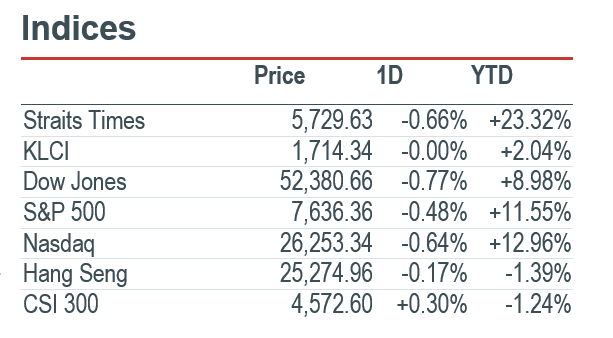
Market Movers: Brent settled above US$100 a barrel and the inflation shock broadened across markets. The S&P 500 fell 0.48% to 7,636.36, the Dow lost 0.77% and the Nasdaq declined 0.64%; energy was the only positive S&P sector. In Asia, Singapore's STI fell 0.66% to 5,729.63 while Korea's KOSPI rose 1.40%. Europe later dropped 1.41% to a six-week low. The message from the completed sessions is that energy exposure is cushioning portfolios, but higher input costs and yields are narrowing the valuation support for rate-sensitive assets. (AP / Reuters / Business Times / Reuters)
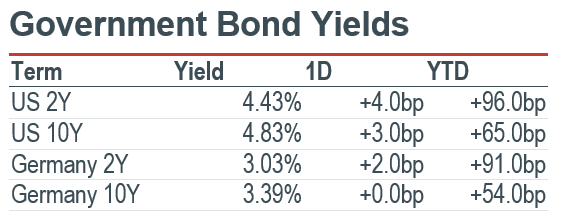
Macro: China's August CPI rose 0.8% year on year and 0.4% month on month, but PPI accelerated 3.8% as upstream energy and materials costs climbed. Official US par yields rose to 4.43% at two years and 4.83% at ten years on 9 September; Germany's current two-year note yielded 3.03% and its ten-year Bund 3.39%. With US PPI and the ECB decision due tonight in Singapore, the oil shock is now testing both disinflation confidence and expectations for policy relief. (NBS / US Treasury / Bundesbank / Bundesbank)
AI: Meta agreed to acquire Sweden's Stilla.ai to deepen transaction capability in its Business Agent across WhatsApp, Messenger and Instagram, extending the contest from model answers to completed commerce. Meta gained 6.55% in the US session. Separately, Analog Devices agreed to buy Alif Semiconductor for US$1.35 billion upfront plus as much as US$200 million contingent, and Google committed at least €13 billion to Finnish AI infrastructure. The capital intensity of agentic and edge AI is rising, rewarding distribution and physical infrastructure while increasing execution risk. (Axios / Company / Reuters / Market data) Meta Platforms (META US) is our Core Recommendation.
AI
Meta adds a transaction layer to Business Agent. Meta agreed to acquire Stilla.ai, whose team and technology are expected to join after closing. The Swedish startup's conversational commerce software is intended to help Meta's Business Agent conduct more complex transactions across WhatsApp, Messenger and Instagram. More than one million businesses already use the agent, so the strategic test is whether transactions lift conversion without weakening merchant control or consumer trust. (Axios) Meta Platforms (META US) is our Core Recommendation.
A 6.55% share-price jump raises the delivery bar. Meta was the clear US mega-cap outlier on 9 September as investors absorbed the prior Muse rollout and the fresh Stilla.ai agreement. The move indicates enthusiasm for agents that can act, not only answer, but also concentrates near-term expectations. Repeat usage, safe task completion and merchant economics are now more important than announcement-day novelty; failure on permissions or reliability would put the rerating at risk. (Reuters / Market data) Meta Platforms (META US) is our Core Recommendation.
Analog Devices buys an edge-AI processor platform. Analog Devices agreed to acquire Alif Semiconductor for US$1.35 billion in cash upfront, with up to US$200 million of contingent consideration. Alif's microcontrollers and fusion processors are already shipping and target low-power, AI-native sensing. The deal broadens Analog Devices' physical-AI stack, but value creation depends on integrating a young platform and converting design wins into durable industrial volumes. (Company)
Google commits €13 billion to Finnish AI capacity. Google plans three new data centres in northern Finland during 2027-28 and paired the build-out with a long-term nuclear-power agreement. Management describes the programme as its largest European investment. Scale and low-carbon power can improve capacity security, but Alphabet fell 2.28% as investors weighed the spending burden and long-dated returns from infrastructure that must remain highly utilised. (Reuters / Market data) Alphabet (GOOGL US) is our Trading Buy.
Semiconductor breadth stayed selective. The Philadelphia semiconductor index edged higher even as NVIDIA declined 0.91%, Broadcom fell 1.13% and the broader Nasdaq lost 0.64%. The divergence argues against treating AI exposure as a single trade. Investors are separating near-term shipment leverage from valuation, capex intensity and company-specific execution, which favours disciplined sizing around earnings evidence rather than chasing a uniform infrastructure theme. (Reuters / Market data / Market data / Market data) NVIDIA (NVDA US) and Broadcom (AVGO US) are our Core Recommendations; iShares Semiconductor ETF (SOXX US) is our Trading Buy.
Americas
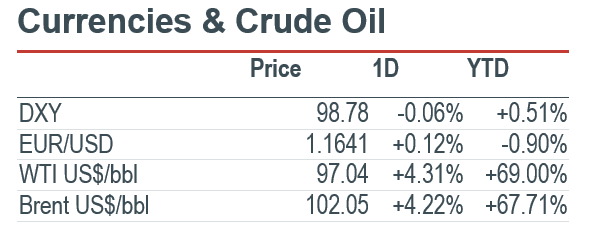
Oil above US$100 reset the inflation narrative. Brent settled at US$101.21, up 3.4%, after disruption around the Strait of Hormuz, while US gasoline and diesel prices were already materially above year-ago levels. The immediate equity split was intuitive: energy gained as every other S&P sector fell. For portfolios, oil exposure is providing inflation protection, but a prolonged shock would raise demand-destruction and policy-tightening risks. (AP / Reuters / Market data / Market data) Energy Select Sector SPDR Fund (XLE US) and Occidental Petroleum (OXY US) are our Core Recommendations.
Treasury yields moved higher ahead of inflation data. The official two-year yield rose 4bp to 4.43% and the ten-year yield increased 3bp to 4.83%, the highest long-end close since late 2023. The Treasury's announced US$6 billion buyback for 10-to-20-year maturities was smaller than some investors expected. August PPI arrives tonight and CPI on Friday, leaving duration assets exposed to evidence that the energy shock is feeding into goods prices. (US Treasury / Reuters / BLS / BLS)
Apple's foldable launch met a restrained tape. Apple introduced the iPhone Duo, its first foldable handset and the first major device event under chief executive John Ternus. The shares slipped 0.3% in a weaker market. The format can refresh the premium replacement cycle, yet the investment case depends on durability, battery life and developer adoption rather than form factor alone; early demand will also test consumers' tolerance for another premium price tier. (AP / Reuters)
Baker Hughes lifted forecasts after the Chart deal. Baker Hughes raised its 2026 revenue outlook to US$28.5-30.3 billion and adjusted EBITDA guidance to US$4.88-5.48 billion after completing the US$13.6 billion acquisition of Chart Industries. The higher ranges increase scale and process-technology exposure, but integration, leverage and synergy delivery now matter more than headline growth. Shares added only 0.53%, signalling that execution remains the market's main question. (Reuters)
Defensive positioning was selective, not uniform. Berkshire Hathaway gained 0.18% and Walmart slipped only 0.21%, but Procter & Gamble lost 2.02% and the consumer-staples ETF fell 1.15%. The dispersion suggests investors are screening balance sheets and valuation rather than buying defensive labels indiscriminately. Cash-generation durability remains useful portfolio ballast, although a rising-yield environment can still compress multiples for established franchises. (Market data / Market data / Market data / Market data) Berkshire Hathaway (BRK/B US), Walmart (WMT US) and Procter & Gamble (PG US) are our Core Recommendations.
Greater China
China's inflation mix improved but stayed uneven. August CPI rose 0.8% year on year and 0.4% month on month, while core CPI increased 1.0%. PPI accelerated 3.8% year on year and 0.4% month on month, with coal, non-ferrous metals, oil, refining and chemicals showing much stronger gains. The mix reduces immediate deflation concern but shifts pressure toward downstream margins where companies lack pricing power. (NBS)
Mainland resilience did not lift Hong Kong broadly. The CSI 300 rose 0.30% to 4,572.60 after the inflation release, while the Hang Seng slipped 0.17% to 25,274.96 and the Hang Seng Tech Index fell about 0.8%. The divergence points to a selective domestic-policy bid rather than a broad regional rerating. Resource earnings may benefit from higher producer prices, but platform and consumer exposure still requires company-level catalysts. (Market data / Market data / Market report)
Haidilao's block sale created a governance overhang. A controlling-shareholder vehicle sold 259 million Haidilao shares, equal to 4.65% of the company, at HK$10.62 for proceeds of about HK$2.75 billion. The company said the transaction did not dilute existing shareholders, but the shares fell roughly 9%. The reaction shows how insider liquidity events can dominate operating fundamentals when positioning and free float change abruptly. (RTHK)
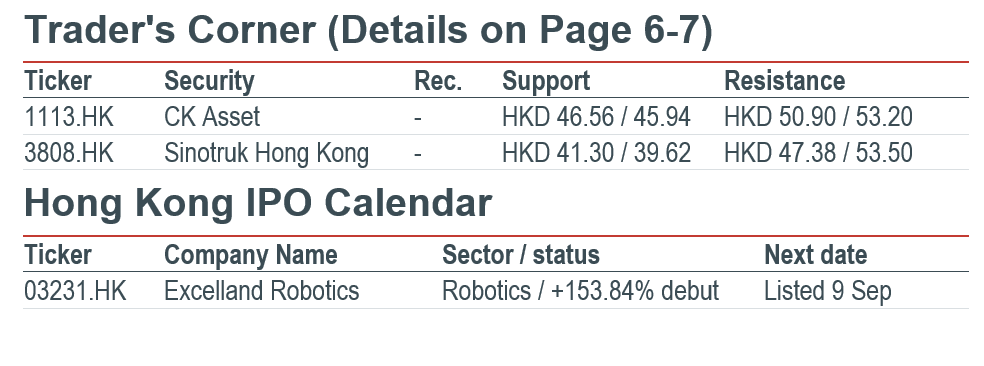
Excelland Robotics surged 153.8% on debut. The Chapter 18C robotics issuer closed at HK$36.68 versus its HK$14.45 offer price after raising about HK$650 million. The first-day gain validates strong appetite for embodied-AI exposure, but it also leaves valuation anchored more to commercialisation expectations than established earnings. Investors should separate demand for scarce thematic listings from proof of repeatable robotics revenue and unit economics. (HKEX / AAStocks)
Asia ex. China
Singapore banks could not offset the oil shock. The STI fell 0.66% to 5,729.63 as DBS lost 0.8%, OCBC declined 1.1% and UOB fell 1.0%. Local breadth was negative, with 297 decliners against 235 advancers. Singapore's externally exposed market remains sensitive to the combination of higher energy costs and rising global yields, even when domestic bank profitability is supported by a higher-rate backdrop. (Business Times)
Singapore Airlines seeks stronger Air India safeguards. Singapore Airlines is expected to seek additional board and governance rights before committing fresh capital to Air India, which is pursuing about US$1.5 billion of equity funding. SIA owns 25.1%, while Tata has approved its pro-rata contribution. The stance is financially disciplined: any new capital should be paired with clearer oversight, milestones and accountability after Air India's sizeable annual loss. (Reuters)
Korea gained on chips and battery hopes. The KOSPI rose 1.40% to 7,051.64. SK Hynix added 3.51%, while LG Energy Solution and Samsung SDI advanced 6.46% and 8.30%, respectively, as investors revisited the competitive position of non-Chinese battery supply chains. Hanwha Ocean also rose after becoming preferred bidder for a Thai frigate project. The session favoured exporters with identifiable policy or order catalysts. (Yonhap)
EMEA and Others
Europe fell to a six-week low as Brent cleared US$100. The STOXX 600 dropped 1.41% to 640.41, with energy the only sector in positive territory. Inditex fell 3.6% after second-quarter profit disappointed despite firmer recent sales. Europe's energy-import sensitivity leaves consumer and industrial margins exposed, and the coming ECB decision must balance those renewed price pressures against a softer risk backdrop. (Reuters / ECB)
Fortum rallied on Google's nuclear-power agreement. Fortum gained 15.8% after agreeing to supply power for Google's planned Finnish data-centre expansion. Google's €13 billion programme could add construction demand, long-term electricity offtake and strategic value to northern European power assets. For utilities, contracted data-centre demand can improve visibility, but grid constraints and capital requirements determine whether headline demand converts into attractive returns. (Reuters)
SThree confirmed a preliminary approach from Circle8. The specialist recruitment group said it had received a highly conditional takeover approach from Circle8 and set a 7 October deadline for a firm offer or withdrawal. No terms were disclosed and there is no certainty of a transaction. The approach highlights strategic interest in recruitment platforms, but investors should avoid capitalising an undisclosed bid premium before financing, price and board support become visible. (Company RNS)
Traders’ corner
Our Technical View
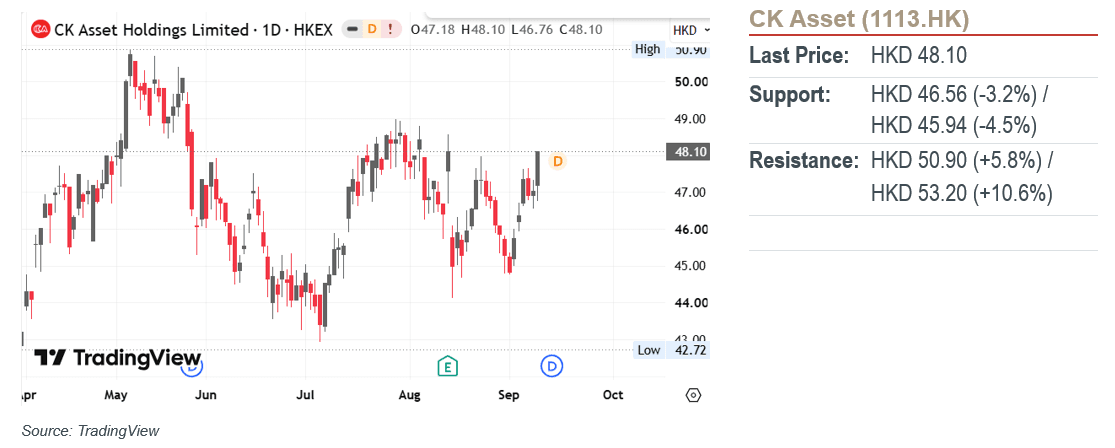
Price executed a decisive upside breakout from a flag pattern yesterday.
Technical momentum heavily reinforces this breakout, as the RSI expands upward well above its neutral 50-midline.
- As long as lower-timeframe retests hold above the broken flag boundary, path-of-least-resistance dynamics heavily favours a sustained upward trajectory toward higher expansionary targets.
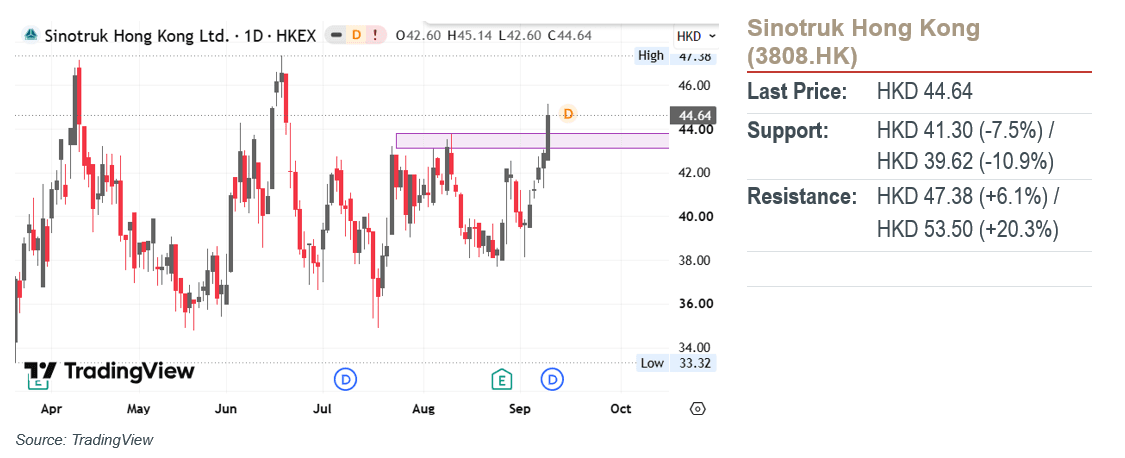
Our Technical View
Price executed a high-conviction breakout above its recent swing high with a strong bullish candle.
Technical momentum heavily reinforces this trend expansion, as the RSI accelerates upward above its neutral 50-midline and advances toward overbought territory.
Provided price holds above the newly converted demand anchor, technical probabilities heavily favours a sustained impulse leg toward upper resistance zone.
Market Movers: Brent settled above US$100 a barrel and the inflation shock broadened across markets. The S&P 500 fell 0.48% to 7,636.36, the Dow lost 0.77% and the Nasdaq declined 0.64%; energy was the only positive S&P sector. In Asia, Singapore's STI fell 0.66% to 5,729.63 while Korea's KOSPI rose 1.40%. Europe later dropped 1.41% to a six-week low. The message from the completed sessions is that energy exposure is cushioning portfolios, but higher input costs and yields are narrowing the valuation support for rate-sensitive assets. (AP / Reuters / Business Times / Reuters)
Macro: China's August CPI rose 0.8% year on year and 0.4% month on month, but PPI accelerated 3.8% as upstream energy and materials costs climbed. Official US par yields rose to 4.43% at two years and 4.83% at ten years on 9 September; Germany's current two-year note yielded 3.03% and its ten-year Bund 3.39%. With US PPI and the ECB decision due tonight in Singapore, the oil shock is now testing both disinflation confidence and expectations for policy relief. (NBS / US Treasury / Bundesbank / Bundesbank)
AI: Meta agreed to acquire Sweden's Stilla.ai to deepen transaction capability in its Business Agent across WhatsApp, Messenger and Instagram, extending the contest from model answers to completed commerce. Meta gained 6.55% in the US session. Separately, Analog Devices agreed to buy Alif Semiconductor for US$1.35 billion upfront plus as much as US$200 million contingent, and Google committed at least €13 billion to Finnish AI infrastructure. The capital intensity of agentic and edge AI is rising, rewarding distribution and physical infrastructure while increasing execution risk. (Axios / Company / Reuters / Market data) Meta Platforms (META US) is our Core Recommendation.
AI
Meta adds a transaction layer to Business Agent. Meta agreed to acquire Stilla.ai, whose team and technology are expected to join after closing. The Swedish startup's conversational commerce software is intended to help Meta's Business Agent conduct more complex transactions across WhatsApp, Messenger and Instagram. More than one million businesses already use the agent, so the strategic test is whether transactions lift conversion without weakening merchant control or consumer trust. (Axios) Meta Platforms (META US) is our Core Recommendation.
A 6.55% share-price jump raises the delivery bar. Meta was the clear US mega-cap outlier on 9 September as investors absorbed the prior Muse rollout and the fresh Stilla.ai agreement. The move indicates enthusiasm for agents that can act, not only answer, but also concentrates near-term expectations. Repeat usage, safe task completion and merchant economics are now more important than announcement-day novelty; failure on permissions or reliability would put the rerating at risk. (Reuters / Market data) Meta Platforms (META US) is our Core Recommendation.
Analog Devices buys an edge-AI processor platform. Analog Devices agreed to acquire Alif Semiconductor for US$1.35 billion in cash upfront, with up to US$200 million of contingent consideration. Alif's microcontrollers and fusion processors are already shipping and target low-power, AI-native sensing. The deal broadens Analog Devices' physical-AI stack, but value creation depends on integrating a young platform and converting design wins into durable industrial volumes. (Company)
Google commits €13 billion to Finnish AI capacity. Google plans three new data centres in northern Finland during 2027-28 and paired the build-out with a long-term nuclear-power agreement. Management describes the programme as its largest European investment. Scale and low-carbon power can improve capacity security, but Alphabet fell 2.28% as investors weighed the spending burden and long-dated returns from infrastructure that must remain highly utilised. (Reuters / Market data) Alphabet (GOOGL US) is our Trading Buy.
Semiconductor breadth stayed selective. The Philadelphia semiconductor index edged higher even as NVIDIA declined 0.91%, Broadcom fell 1.13% and the broader Nasdaq lost 0.64%. The divergence argues against treating AI exposure as a single trade. Investors are separating near-term shipment leverage from valuation, capex intensity and company-specific execution, which favours disciplined sizing around earnings evidence rather than chasing a uniform infrastructure theme. (Reuters / Market data / Market data / Market data) NVIDIA (NVDA US) and Broadcom (AVGO US) are our Core Recommendations; iShares Semiconductor ETF (SOXX US) is our Trading Buy.
Americas
Oil above US$100 reset the inflation narrative. Brent settled at US$101.21, up 3.4%, after disruption around the Strait of Hormuz, while US gasoline and diesel prices were already materially above year-ago levels. The immediate equity split was intuitive: energy gained as every other S&P sector fell. For portfolios, oil exposure is providing inflation protection, but a prolonged shock would raise demand-destruction and policy-tightening risks. (AP / Reuters / Market data / Market data) Energy Select Sector SPDR Fund (XLE US) and Occidental Petroleum (OXY US) are our Core Recommendations.
Treasury yields moved higher ahead of inflation data. The official two-year yield rose 4bp to 4.43% and the ten-year yield increased 3bp to 4.83%, the highest long-end close since late 2023. The Treasury's announced US$6 billion buyback for 10-to-20-year maturities was smaller than some investors expected. August PPI arrives tonight and CPI on Friday, leaving duration assets exposed to evidence that the energy shock is feeding into goods prices. (US Treasury / Reuters / BLS / BLS)
Apple's foldable launch met a restrained tape. Apple introduced the iPhone Duo, its first foldable handset and the first major device event under chief executive John Ternus. The shares slipped 0.3% in a weaker market. The format can refresh the premium replacement cycle, yet the investment case depends on durability, battery life and developer adoption rather than form factor alone; early demand will also test consumers' tolerance for another premium price tier. (AP / Reuters)
Baker Hughes lifted forecasts after the Chart deal. Baker Hughes raised its 2026 revenue outlook to US$28.5-30.3 billion and adjusted EBITDA guidance to US$4.88-5.48 billion after completing the US$13.6 billion acquisition of Chart Industries. The higher ranges increase scale and process-technology exposure, but integration, leverage and synergy delivery now matter more than headline growth. Shares added only 0.53%, signalling that execution remains the market's main question. (Reuters)
Defensive positioning was selective, not uniform. Berkshire Hathaway gained 0.18% and Walmart slipped only 0.21%, but Procter & Gamble lost 2.02% and the consumer-staples ETF fell 1.15%. The dispersion suggests investors are screening balance sheets and valuation rather than buying defensive labels indiscriminately. Cash-generation durability remains useful portfolio ballast, although a rising-yield environment can still compress multiples for established franchises. (Market data / Market data / Market data / Market data) Berkshire Hathaway (BRK/B US), Walmart (WMT US) and Procter & Gamble (PG US) are our Core Recommendations.
Greater China
China's inflation mix improved but stayed uneven. August CPI rose 0.8% year on year and 0.4% month on month, while core CPI increased 1.0%. PPI accelerated 3.8% year on year and 0.4% month on month, with coal, non-ferrous metals, oil, refining and chemicals showing much stronger gains. The mix reduces immediate deflation concern but shifts pressure toward downstream margins where companies lack pricing power. (NBS)
Mainland resilience did not lift Hong Kong broadly. The CSI 300 rose 0.30% to 4,572.60 after the inflation release, while the Hang Seng slipped 0.17% to 25,274.96 and the Hang Seng Tech Index fell about 0.8%. The divergence points to a selective domestic-policy bid rather than a broad regional rerating. Resource earnings may benefit from higher producer prices, but platform and consumer exposure still requires company-level catalysts. (Market data / Market data / Market report)
Haidilao's block sale created a governance overhang. A controlling-shareholder vehicle sold 259 million Haidilao shares, equal to 4.65% of the company, at HK$10.62 for proceeds of about HK$2.75 billion. The company said the transaction did not dilute existing shareholders, but the shares fell roughly 9%. The reaction shows how insider liquidity events can dominate operating fundamentals when positioning and free float change abruptly. (RTHK)
Excelland Robotics surged 153.8% on debut. The Chapter 18C robotics issuer closed at HK$36.68 versus its HK$14.45 offer price after raising about HK$650 million. The first-day gain validates strong appetite for embodied-AI exposure, but it also leaves valuation anchored more to commercialisation expectations than established earnings. Investors should separate demand for scarce thematic listings from proof of repeatable robotics revenue and unit economics. (HKEX / AAStocks)
Asia ex. China
Singapore banks could not offset the oil shock. The STI fell 0.66% to 5,729.63 as DBS lost 0.8%, OCBC declined 1.1% and UOB fell 1.0%. Local breadth was negative, with 297 decliners against 235 advancers. Singapore's externally exposed market remains sensitive to the combination of higher energy costs and rising global yields, even when domestic bank profitability is supported by a higher-rate backdrop. (Business Times)
Singapore Airlines seeks stronger Air India safeguards. Singapore Airlines is expected to seek additional board and governance rights before committing fresh capital to Air India, which is pursuing about US$1.5 billion of equity funding. SIA owns 25.1%, while Tata has approved its pro-rata contribution. The stance is financially disciplined: any new capital should be paired with clearer oversight, milestones and accountability after Air India's sizeable annual loss. (Reuters)
Korea gained on chips and battery hopes. The KOSPI rose 1.40% to 7,051.64. SK Hynix added 3.51%, while LG Energy Solution and Samsung SDI advanced 6.46% and 8.30%, respectively, as investors revisited the competitive position of non-Chinese battery supply chains. Hanwha Ocean also rose after becoming preferred bidder for a Thai frigate project. The session favoured exporters with identifiable policy or order catalysts. (Yonhap)
EMEA and Others
Europe fell to a six-week low as Brent cleared US$100. The STOXX 600 dropped 1.41% to 640.41, with energy the only sector in positive territory. Inditex fell 3.6% after second-quarter profit disappointed despite firmer recent sales. Europe's energy-import sensitivity leaves consumer and industrial margins exposed, and the coming ECB decision must balance those renewed price pressures against a softer risk backdrop. (Reuters / ECB)
Fortum rallied on Google's nuclear-power agreement. Fortum gained 15.8% after agreeing to supply power for Google's planned Finnish data-centre expansion. Google's €13 billion programme could add construction demand, long-term electricity offtake and strategic value to northern European power assets. For utilities, contracted data-centre demand can improve visibility, but grid constraints and capital requirements determine whether headline demand converts into attractive returns. (Reuters)
SThree confirmed a preliminary approach from Circle8. The specialist recruitment group said it had received a highly conditional takeover approach from Circle8 and set a 7 October deadline for a firm offer or withdrawal. No terms were disclosed and there is no certainty of a transaction. The approach highlights strategic interest in recruitment platforms, but investors should avoid capitalising an undisclosed bid premium before financing, price and board support become visible. (Company RNS)
Traders’ corner
Our Technical View
Price executed a decisive upside breakout from a flag pattern yesterday.
Technical momentum heavily reinforces this breakout, as the RSI expands upward well above its neutral 50-midline.
- As long as lower-timeframe retests hold above the broken flag boundary, path-of-least-resistance dynamics heavily favours a sustained upward trajectory toward higher expansionary targets.
Our Technical View
Price executed a high-conviction breakout above its recent swing high with a strong bullish candle.
Technical momentum heavily reinforces this trend expansion, as the RSI accelerates upward above its neutral 50-midline and advances toward overbought territory.
Provided price holds above the newly converted demand anchor, technical probabilities heavily favours a sustained impulse leg toward upper resistance zone.
Disclosures and disclaimers
This report is provided subject to, and must be read together with, the full Disclosures / Disclaimers available at this link, which are incorporated by reference into this report. In particular, this report is intended for general circulation and informational purposes only and does not constitute personal investment advice or a recommendation to buy or sell any investment product or security. You should independently evaluate the information and, where necessary, seek advice from a qualified financial adviser regarding the suitability of any investment. Analyst certifications required under applicable regulations, including SEC Regulation AC (where relevant), are included in this report. By accessing, receiving or using this report, you acknowledge that you have read, understood and agreed to be bound by the Disclosures / Disclaimers, as may be amended, supplemented or updated from time to time.


